
STADS Physiotherapy
Stroke (CVA)
Working step by step towards what you want to be able to do again after a stroke.
or call 040 – 311 1151 / 013 – 303 0361
No referral neededSeen within 48 hoursContracts with all health insurers
You’ve had a stroke, or someone you love has. Suddenly walking, talking or using your arm no longer comes naturally, and thinking and planning can be harder too. On this page you can read what a stroke (CVA) is, how recovery usually goes and how physiotherapy and occupational therapy can help you live as independently as possible again.
What is a CVA?
CVA stands for cerebrovascular accident. In plain language: a stroke. Something goes wrong with the blood supply to the brain, so part of the brain tissue gets too little oxygen and is damaged.
There are two main types. In an ischaemic stroke, a blood vessel in the brain becomes blocked, usually by a blood clot. This is the most common type. In a brain haemorrhage, a blood vessel bursts and blood flows into or around the brain. A TIA (mini-stroke) is a short-lived blockage in which the symptoms disappear again within a short time. That too is a serious warning.
Which effects you notice depends on the location and size of the damage. The left side of the brain controls the right side of your body and vice versa. That’s why you often see paralysis or loss of strength on one side. A stroke is a form of acquired brain injury (NAH).
What effects can you have?
The effects of a stroke vary greatly from person to person. Common symptoms include:
- Loss of strength or paralysis of an arm, leg or half of the face, usually on one side
- Difficulty walking and keeping your balance, and a greater risk of falling
- Problems with fine motor skills, such as doing up buttons or writing
- Difficulty speaking or understanding language (aphasia)
- Extreme fatigue that doesn’t go away after a night’s sleep
- Problems with concentration, memory, planning or keeping track of things
- Changes in mood or behaviour, such as becoming emotional or low more easily
Some effects are clearly visible, others can’t be seen from the outside. It’s often those invisible effects that have a big impact on daily life.
What causes a stroke?
An ischaemic stroke is usually caused by hardening of the arteries (atherosclerosis): narrowings develop on the inside of blood vessels. A clot can form there or be carried from elsewhere, for example from the heart in atrial fibrillation. In a brain haemorrhage, high blood pressure often plays an important role, weakening the wall of a blood vessel so that it can burst.
The risk of a stroke increases with age, but younger people can have a stroke too. Known risk factors are:
- High blood pressure
- Smoking
- High cholesterol and diabetes
- Heart rhythm disorders such as atrial fibrillation, and a previous TIA or stroke
- Little exercise, being overweight and drinking a lot of alcohol
You can influence some of these factors yourself. After a stroke, your GP or neurologist will therefore often discuss medication and lifestyle to reduce the risk of another stroke. Regular exercise is part of that too. Physiotherapy can help you take this up in a safe and achievable way.
How long does recovery take?
Recovery after a stroke is different for everyone. Recovery is usually fastest in the first weeks to months. During that period the brain partly recovers by itself and you relearn a lot through practice. After that, progress is often slower, but even then you can still learn to do things differently or better.
Not all effects disappear completely. Some people are left with lasting symptoms, such as loss of strength, fatigue or concentration problems. Then the goal shifts: not just recovering, but also learning to deal with what has changed, so you can keep taking part as fully as possible. Even months or years after a stroke, support can still be worthwhile, for example if you’re deteriorating or your situation changes.
When should you see a physiotherapist or occupational therapist?
- You’re home after a hospital stay or rehabilitation and want to keep practising
- You feel unsteady when walking, are afraid of falling or have already fallen
- You notice your fitness or strength declining
- Daily tasks such as dressing, cooking or shopping take a lot of effort
- You tire quickly and want to learn to pace your energy better
- You want to return to work, a hobby or sport and aren’t sure how
Can’t work it out on your own?
Our physiotherapists and occupational therapists are happy to help. In most cases you can come without a referral, in Eindhoven or Tilburg.
When should you call 112 or see your GP straight away?
Do you think someone is having a stroke right now? Every minute counts. Call 112 immediately with one or more of these sudden signs:
- A crooked mouth or a drooping corner of the mouth
- An arm or leg that is suddenly weak or paralysed
- Sudden difficulty speaking, slurred speech or being unable to find words
Also call 112 if these symptoms disappear again after a few minutes, as this may be a TIA. Contact your GP straight away if you develop new or rapidly worsening symptoms after a stroke.
How STADS helps after a stroke
At STADS, physiotherapists and occupational therapists work together, and we coordinate with your GP, neurologist or rehabilitation physician. They are responsible for the medical treatment. We focus on movement and daily functioning, alongside that care. We start with a thorough conversation. What happened, what still goes well and what do you want to be able to do again? Then we assess your strength, balance, walking pattern and how you carry out daily activities.
We explain what we see and how it relates to your brain injury. Together, we set concrete goals. That might be: climbing the stairs independently, walking around the neighbourhood again or cooking a meal yourself. Your partner or loved one is welcome to be involved, because a stroke often affects the whole family.
The physiotherapist trains with you on strength, balance, walking and fitness. We build up gradually and practise as much as possible in situations that matter to you. Repetition is important. With a fear of falling or an increased risk of falls, fall prevention can be part of the programme, and boxing training for acquired brain injury can be a challenging way to work on coordination, reaction speed and fitness.
The occupational therapist looks at your daily life: at home, at work and in your free time. Together, we look for smart ways to carry out tasks, pace your energy and use any aids or adaptations. That way you work step by step towards more independence.
What can you do yourself?
- Keep moving every day, even if it’s in small bits
- Practise the things you want to be able to do again in your own surroundings, such as climbing stairs or getting dressed
- Alternate activity and rest, and plan demanding tasks for when you have the most energy
- Take your medication as agreed and have your blood pressure checked regularly
- Stop smoking and drink little or no alcohol
- Talk about how things are going, with your loved ones, your GP or others in the same situation
Read also
Related complaints
Good to know
Frequently asked questions
Do I need a referral?
In most cases you can come for physiotherapy and occupational therapy without a referral. We first do a short screening to see whether therapy with us is suitable. After a stroke, we do like to receive information from your GP, neurologist or rehabilitation centre, so we can build on the care you’ve already had. A referral may sometimes also be needed for reimbursement.
Is it covered by my insurance?
That depends on your health insurance and your supplementary package. For some chronic conditions, including the effects of a stroke, a different arrangement applies under your basic insurance. Occupational therapy is covered by the basic insurance for a limited number of hours per year, and your deductible (eigen risico) applies. For more information, see reimbursements and rates or check your policy.
Is therapy still worthwhile if my stroke was a long time ago?
Often, yes. The fastest recovery is usually in the first months, but you can still make progress after that through targeted practice. Therapy also helps you maintain your fitness, limit decline and deal more smartly with lasting symptoms. If your situation changes, for example because of a move or a new job, support can also be worthwhile.
What’s the difference between physiotherapy and occupational therapy after a stroke?
The physiotherapist focuses mainly on movement: strength, balance, walking, fitness and preventing falls. The occupational therapist looks at your daily activities, such as self-care, household tasks, work and leisure, and at how you pace your energy. At STADS both therapists can work together, so practice and daily life fit together well.
Can my partner or a loved one come along?
Yes, in fact that’s often helpful. A stroke also affects your loved ones. If they know what you’re practising and what you’re struggling with, they can support you better at home. We’re happy to give them explanations and tips, for example on helping safely with walking or how to deal with fatigue together.
Our locations
Two practices, one team
In Eindhoven and Tilburg, physiotherapists and occupational therapists work together under one roof. Choose the practice that’s easiest for you.
Eindhoven

Centrally located on Geldropseweg, with spacious treatment rooms and a large exercise room. Easy to reach by bike, public transport and car.
Address
Geldropseweg 28
5611 SJ Eindhoven
Free parking behind the building
Tilburg
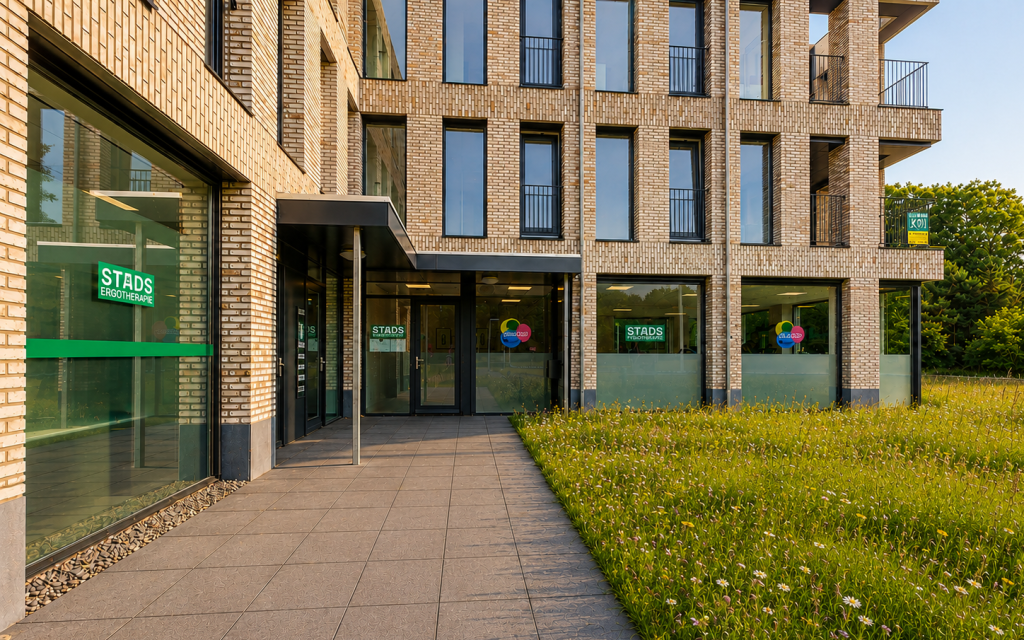
Right in the heart of the Reeshof, close to the A58 exit. Also easy to reach from the surrounding villages.
Address
Reeshofweg 40
5036 BK Tilburg
Mon to Fri, 08.00–18.00
Questions first?
Rather talk to someone first?
Not sure if we can help, or have a question about your treatment or reimbursement? Feel free to get in touch.
Call the practice
You’ll speak to one of us straight away. We’ll check the diary together there and then.
Leave your details
Fill in the contact form and we’ll get back to you as soon as possible.