

STADS Physiotherapy
Knee pain
Your knee carries you all day. With the right approach, you can trust every step again.
or call 040 – 311 1151 / 013 – 303 0361
No referral neededSeen within 48 hoursContracts with all health insurers
Your knee hurts when you climb stairs, play sport or after sitting for a long time, or it sometimes feels unreliable. Knee pain is common, in young and old alike. On this page you can read what may be going on in your knee, how problems develop, what you can do yourself and how our physiotherapists can help you.
What is knee pain?
Knee pain is an umbrella term for pain, stiffness, swelling or a feeling of instability in and around the knee. The knee is a hinge joint between your thigh bone and your shin bone. The kneecap sits at the front and glides along a groove in the thigh bone as you bend and straighten your knee.
Inside the knee are two menisci: discs of cartilage that absorb shocks and give the joint stability. Four important ligaments keep the bones in place, including the anterior cruciate ligament. Around them, muscles and tendons, such as your thigh muscles, provide strength and control.
Knee pain can come from any of these structures. Think of pain at the front of the knee, a tendon problem, a meniscus or ligament injury after a twisting movement, or wear of the cartilage (osteoarthritis). Often there is no clear damage, and the knee has simply been asked to do more than it can handle at that moment.
What symptoms can you have?
- Pain when climbing stairs, squatting, kneeling or getting up from a chair
- Pain during or after sport, such as running, jumping or twisting
- Stiffness, especially in the morning or after sitting still for a long time
- Swelling or a warm feeling around the knee
- A feeling of instability, as if your knee gives way
- The knee catching, clicking or locking
Cracking without pain is usually harmless and nothing to worry about.
How does knee pain develop?
Broadly speaking, knee pain develops in two ways: suddenly, through an accident or a twist, or gradually, through overload. A sudden injury often involves a twisting movement with the foot planted on the ground, for example in football, hockey or skiing. This can cause a ligament injury or a meniscus injury.
Gradual complaints usually have to do with the balance between load and load capacity. Load is what you ask of your knee: sport, work, climbing stairs. Load capacity is what your knee can handle at that moment. If you suddenly do much more in a short time, for example a new running programme or a busy house move, your knee may not yet be ready for it. Moving less for a long period also lowers your load capacity.
Factors that can play a role include:
- A rapid increase in sport or activity
- Little strength in the thigh and hip muscles
- Being overweight, because the knee then carries more weight
- A previous knee injury
- Getting older, which increases the chance of osteoarthritis
Often it is a combination of factors, rather than one clear cause.
How long does it last?
How long knee pain lasts varies greatly by cause and by person. Complaints caused by overload often ease within a few weeks to a few months, especially if you adjust the load sensibly and keep moving. After a twist or ligament injury, recovery can take longer, sometimes months, depending on what has been damaged.
With osteoarthritis it is different: symptoms can come and go, with better and worse periods. Even then, the right exercises often help you function better and have less pain. Recovery rarely follows a straight line. A day with more pain usually does not mean something is breaking, but that your knee had a bit too much to deal with that day.
When should you see a physiotherapist?
- Your symptoms have not clearly improved after two to three weeks
- Your knee hurts during everyday things such as climbing stairs, cycling or walking
- After a twist or fall, you are unsure whether your knee is stable enough
- You want to return to sport but do not know how to build up safely
- You have osteoarthritis and want to be able to move more
- You want to rehabilitate after knee surgery
Not sure what to do?
Our physiotherapists and occupational therapists are happy to help you work it out. In most cases you can come to us without a referral, in Eindhoven or Tilburg.
When should you see your GP straight away?
Contact your huisarts (GP) or the out-of-hours GP service (huisartsenpost) straight away if:
- Your knee swells up badly straight after a fall or accident and you cannot stand on it
- Your knee is red, warm and swollen and you have a fever or feel unwell
- Your knee is completely locked and you can no longer straighten it
- Your calf is suddenly painful, swollen and warm, especially after surgery or sitting still for a long time
How STADS helps with knee pain
At STADS, we start by listening. When did your symptoms start, what makes them worse and what do you want to be able to do again? Then we examine your knee, but also your hip, your ankle and how you move. This gives us a clear picture of what is going on and whether there are signs of an injury that needs to be discussed with your GP.
We explain in plain language what we think is going on. Understanding why your knee hurts helps you to deal with it better yourself. Together we set goals that matter to you, such as cycling to work pain-free again or playing a full match.
The core of the treatment is exercise therapy. You work on the strength, stability and control of your leg, and we build up the load step by step. We also give you exercises to do at home. Where it fits, hands-on treatment or other support can help you move more easily, but that is always in addition to active exercise.
If you play sport, our sports physiotherapy can help you return to your sport responsibly. If you have knee osteoarthritis, you can join the GLA:D programme, a proven exercise and education programme for people with hip and knee osteoarthritis.
What can you do yourself?
- Keep moving within what your knee allows. Mild pain during movement is usually not a problem, as long as it is not clearly worse the next day.
- Temporarily cut back on the activity that causes the most pain, rather than stopping altogether.
- Cycling and walking are often good ways to stay active.
- Build up sport and training gradually, without big jumps in distance or intensity.
- Train your thigh and hip muscles regularly, for example by getting up from a chair.
- A cold pack can feel good on a swollen knee after exercise, but it is not essential.
Read also
Related complaints
Good to know
Frequently asked questions
Do I need a referral?
No, in most cases you can come for physiotherapy without a referral from your GP. At your first appointment we then start with a short screening. We check whether physiotherapy suits your complaint, or whether it is wiser to see your GP first. If you do have a referral, feel free to bring it along.
Is physiotherapy reimbursed?
That depends on your health insurance and your supplementary package. Many supplementary insurance policies cover a number of treatments per year. For some chronic conditions, a different arrangement applies under the basic insurance. Check your policy or read more on our page about reimbursements and rates.
Do I need a scan or X-ray of my knee?
Usually not. For most knee complaints, a good conversation and a physical examination give enough information. An MRI or X-ray also often shows changes that are found in people without any symptoms too, such as small tears or wear. If we suspect a serious injury, we will discuss further tests with your GP.
Can I keep playing sport with knee pain?
Often yes, in an adapted form. Stopping completely is usually not necessary and can even make your knee less strong. Together we look at what load your knee can handle and what you are better off adjusting for now. A handy rule of thumb: pain during sport may be mild and should not be clearly worse the next morning.
Is a meniscus tear always a reason for surgery?
No. For many meniscus problems, especially wear-related ones in middle age, exercise therapy is the first choice. Research shows that surgery in those situations often works no better than good exercise. If your knee is truly locked, or it does not improve after a period of exercise therapy, you can discuss with your GP or orthopaedic surgeon whether further treatment makes sense.
Our locations
Two practices, one team
In Eindhoven and Tilburg, physiotherapists and occupational therapists work together under one roof. Choose the practice that is easiest for you.
Eindhoven

Centrally located on Geldropseweg, with spacious treatment rooms and a large exercise area. Easy to reach by bike, public transport and car.
Address
Geldropseweg 28
5611 SJ Eindhoven
Free parking behind the building
Tilburg
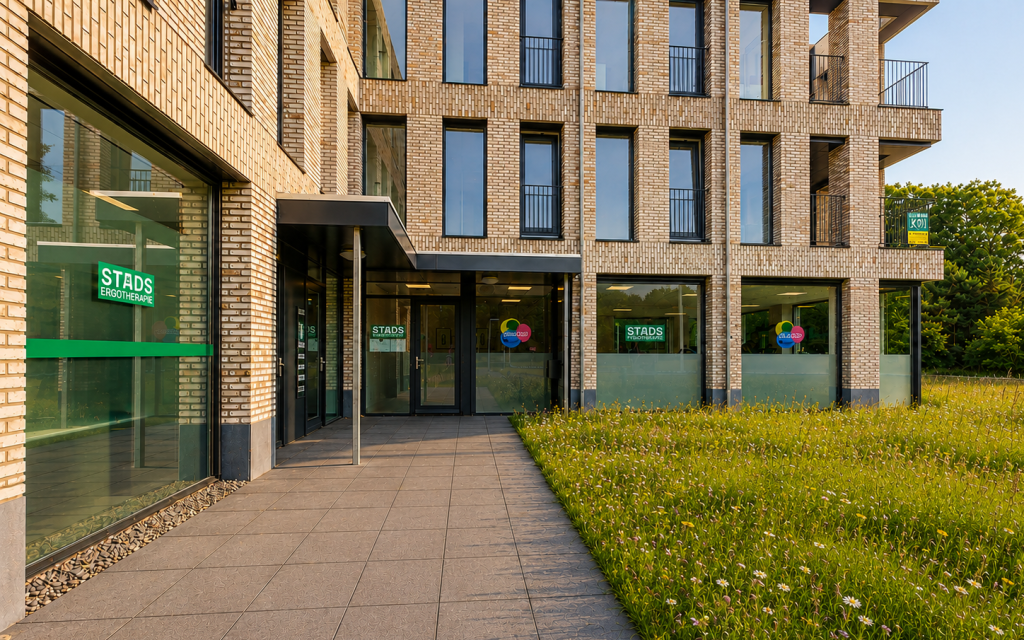
In the heart of the Reeshof, close to the A58 exit. Also easy to reach from the surrounding villages.
Address
Reeshofweg 40
5036 BK Tilburg
Mon to Fri, 8.00 to 18.00
Questions first?
Rather talk to someone first?
Not sure whether we can help, or have a question about your treatment or reimbursement? Just get in touch.
Call the practice
You will speak to one of us straight away, and we can look at the diary together right then.
Leave your details
Fill in the contact form and we will get back to you as soon as possible.