

STADS Physiotherapy
Sports physiotherapy
 Specialists in treating sports-related injuries Helping you get back to your sport as quickly as possible For knee, ankle and shoulder injuries, among others
or call 040 – 311 1151 / 013 – 303 0361
No referral neededSeen within 48 hoursContracts with all health insurers
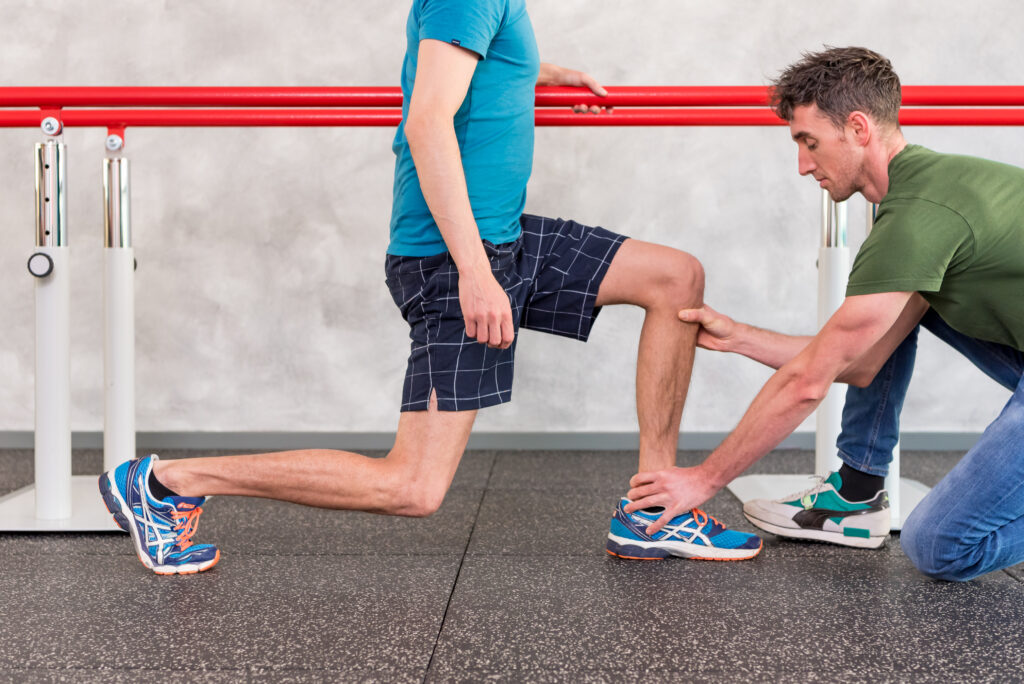
Sport matters, and injuries come with it
Sport does not just improve your fitness and muscle strength. It also contributes to a healthy lifestyle, a good night’s sleep and a lower risk of all kinds of unpleasant diseases.
But if you play sport, you will pick up an injury now and then. And then you do not want to hear that you need three months of rest – you want to know how to get going again as quickly as is responsible.
What makes a sports physiotherapist different?
After their physiotherapy degree, sports physiotherapists spend another three to four years specialising in sport and load. They do not just look at the injury, but at the sport behind it: what load does it involve, and where did things go wrong in the build-up?
That is why treatment does not stop when the pain has gone. Being pain-free is not the same as being ready for a match, and that difference is exactly where most re-injuries happen.
What can we help you with?
- knee pain, from meniscus problems to jumper’s knee
- ankle injuries and instability
- shoulder pain in overhead sports
- Achilles tendon pain and other tendon problems
- recurring muscle injuries
- returning to sport after surgery
Back to your own level
We build up to the load your sport really demands. For one person that is running three times a week, for another a competitive match. That end point shapes the programme, not the other way round.
Want to keep training in a supervised setting afterwards? Then take a look at medical fitness.
What is sports physiotherapy?
Sports physiotherapy is a specialisation within physiotherapy. It focuses on treating sports-related injuries. Sports physiotherapists have in-depth knowledge of anatomy, kinematics, pathology, training theory and physiological recovery processes, and how these affect recovery.
What is the difference between a physiotherapist and a sports physiotherapist?
You need a bachelor’s degree in physiotherapy before you can go on to study sports physiotherapy. So every sports physiotherapist is also a physiotherapist. Sports physiotherapists are the experts in evidence-based clinical reasoning and in sport-specific movement analysis aimed at sports rehabilitation
What injuries can sports physiotherapy help with?
The most common sports injuries affect the shoulder, ankle/foot, hip/groin or knee. These can be ‘simple’ muscle or tendon problems, but also complex sports trauma.
Sports physiotherapists also guide recovery after surgery in these areas, with attention to motor skills, strength and flexibility.
What does a sports physiotherapist do?
- Screening and diagnosis of a wide range of sports injuries.
- Carrying out diagnostic tests and performance tests.
- Drawing up a specialised, tailored plan for treating (elite) athletes.
- Supporting athletes in a training or match situation.
Am I insured for sports physiotherapy?
If you are under 18, sports physiotherapy is covered by your basisverzekering (basic insurance). If you are over 18, you need supplementary insurance. Every package has different conditions.
For more information, contact your health insurer, or call STADS. We are happy to help you work it out.
What does sports physiotherapy cost?
Even if you are not insured for sports physiotherapy, you can still see a sports physiotherapist. In that case we charge a practice rate. Click here for more information.
How many sports physiotherapy sessions do you need?
That depends on what you need help with. Some people are only looking for training tips or advice and need just 1 or a few sessions. In other cases, an athlete is supported over a longer period in a sports rehabilitation programme.
Questions first?
Rather talk to someone first?
Not sure whether we can help, or have a question about your treatment or reimbursement? Just get in touch.
Call the practice
You will speak to one of us straight away, and we can look at the diary together right then.
Leave your details
Fill in the contact form and we will get back to you as soon as possible.