

STADS Physiotherapy
Hip pain
Walking, getting up and sleeping with ease: that’s where it starts when your hip works with you again.
or call 040 – 311 1151 / 013 – 303 0361
No referral neededSeen within 48 hoursContracts with all health insurers
You feel pain in your groin, on the side of your hip or deep in your buttock. Perhaps you notice it when walking, when putting on your socks or when you lie on your side at night. On this page you’ll read what hip pain is, how it develops and how our physiotherapists can help you.
What is hip pain?
Hip pain is an umbrella term for pain or stiffness in and around the hip joint. Your hip is a ball-and-socket joint: the rounded head of your thigh bone turns in a socket in your pelvis. That lets you move your leg in many directions. A rim of cartilage around the socket, the labrum, gives extra stability.
Around the hip are strong muscles, such as the buttock muscles at the back and side and the groin muscles at the front. They provide strength and stability when walking, climbing stairs and standing on one leg.
Pain can come from different places. Pain in the groin often points to the joint itself, for example with hip osteoarthritis. Pain on the outside of the hip is usually related to the tendons of the buttock muscles; this is also called greater trochanteric pain syndrome. Pain in the buttock can also come from the lower back. That’s why a thorough examination is important.
What symptoms can you have?
- Pain in the groin, sometimes spreading to the front of the thigh or the knee
- Pain on the outside of the hip, especially when lying on that side
- Stiffness when getting up or after sitting for a long time, which eases after moving for a while
- Difficulty putting on socks and shoes or getting in and out of the car
- Pain when walking, climbing stairs or standing on one leg
- Limping or not being able to walk as far
What causes hip pain?
The cause of hip pain depends on your age and what you do. In people over fifty, hip osteoarthritis is a common cause. The cartilage in the joint becomes thinner and the joint adapts. That sounds frightening, but osteoarthritis on an X-ray says little about how much trouble you have. Many people with osteoarthritis function well.
Pain on the side of the hip often comes from overloading the tendons of the buttock muscles. You see it more often in women around the menopause, in people who have started walking more or who move very little, and with standing on one leg for long periods or sitting with your legs crossed.
In younger, active people, problems can arise from sports with a lot of twisting, sprinting or kicking, such as football. The muscles around the groin or the joint itself can then become irritated.
Here too, the balance between load and load capacity plays a part. Suddenly doing much more, but also moving very little for a long time, weak hip muscles and being overweight can increase the risk of problems.
How long does it last?
How long hip pain lasts depends on the cause. Tendon and muscle problems around the hip often improve gradually over a few weeks to months, but can be stubborn if the load isn’t adjusted. Patience and regular exercise are important then.
Hip osteoarthritis is a lasting condition, but the symptoms aren’t always the same. There are periods when things go better and periods with more trouble. With exercise therapy, enough movement and, if needed, weight loss, many people can reduce their pain and function better. Surgery only comes into the picture if the symptoms limit you too much despite good treatment, and you decide that together with your GP and orthopaedic surgeon.
When should you see a physiotherapist?
- Your hip has hurt for more than two to three weeks without clear improvement
- You can’t walk as far or your daily activities are getting harder
- You wake up at night because you’re lying on your hip
- You know you have hip osteoarthritis and want to learn how to keep moving
- You want to rehabilitate after a hip replacement
- You get groin pain during sport that keeps coming back
Can’t work it out on your own?
Our physiotherapists and occupational therapists are happy to help. In most cases you can come without a referral, in Eindhoven or Tilburg.
When should you see your GP straight away?
See your GP or the out-of-hours GP service (huisartsenpost) straight away if:
- You can no longer stand on your leg after a fall, especially if you’re older; this may point to a hip fracture
- Your hip suddenly becomes very painful and you have a fever or feel ill
- You have pain that keeps getting worse at rest and at night, together with unexplained weight loss
- Your child starts limping or has hip or knee pain without a clear cause
How STADS helps with hip pain
At STADS, we take the time to hear your story. Where exactly is the pain, when does it bother you and what do you want to be able to do again? Then we examine your hip, your lower back and how you walk and move. That way we can judge where your symptoms are coming from and whether it would be wise to involve your GP.
We explain clearly what’s going on. For example, why osteoarthritis doesn’t mean you have to stop moving, or why certain positions irritate an inflamed tendon even more. Together we set concrete goals, such as walking for an hour again or sleeping on your side without pain.
The treatment consists mainly of exercise therapy. You work on the strength of your hip and buttock muscles, on mobility and on your stamina. We build up the load step by step and give you exercises to do at home. For a stubborn tendon problem on the side of the hip, shockwave therapy can sometimes add to the exercise programme.
If you have hip osteoarthritis, you can take part in the GLA:D programme. In it you learn what osteoarthritis is and train under supervision following a proven approach. In our medical fitness you can also keep training under supervision after your treatment.
What can you do yourself?
- Keep moving. Walking, cycling and swimming are often very doable, even with osteoarthritis.
- Switch regularly between sitting, standing and walking instead of staying in one position for a long time.
- Pain on the side of your hip? Then avoid sitting with your legs crossed and standing with your weight on one leg.
- When sleeping on your side, put a pillow between your knees.
- Build up activities gradually and spread heavy jobs over the day.
- If you’re overweight, losing a few kilos can already noticeably reduce the load on your hip.
Read also
Related complaints
Good to know
Frequently asked questions
Do I need a referral?
No. In most cases you can come for physiotherapy without a referral from your GP. At your first appointment, we start with a short screening. We check whether physiotherapy suits your complaint, or whether it would be wise to see your GP first. If you do have a referral, feel free to bring it along.
Is physiotherapy covered by my insurance?
That depends on your health insurance and your supplementary package. Many supplementary insurance policies cover a number of treatments per year. For some chronic conditions, a different arrangement applies under your basic insurance. Check your policy or read more on our page about reimbursements and rates.
Is hip osteoarthritis a reason to move less?
No, quite the opposite. Moving is one of the best things you can do for hip osteoarthritis. It keeps your muscles strong and your joint supple, and it helps reduce pain. The key is to get the dose of load right. A little pain during or after exercise is usually not a problem, as long as it settles within a day.
Why does my hip hurt at night when I lie on my side?
When you lie on your side, there’s pressure on the tendons on the outside of your hip. If they’re irritated, that can cause pain. Lying on the other side can also cause problems, because the tendons are then stretched. A pillow between your knees often helps. Strengthening your buttock muscles is also important for recovery.
Do I need a new hip?
That’s usually not the first step. With hip osteoarthritis, you start with explanation, exercise therapy and pain relief if needed. Many people can function well with that for a long time. If you remain too limited in your daily life despite good treatment, you can discuss with your GP and orthopaedic surgeon whether surgery makes sense. Even then, good training beforehand helps your recovery.
Our locations
Two practices, one team
In Eindhoven and Tilburg, physiotherapists and occupational therapists work together under one roof. Choose the practice that’s easiest for you.
Eindhoven

Centrally located on Geldropseweg, with spacious treatment rooms and a large exercise room. Easy to reach by bike, public transport and car.
Address
Geldropseweg 28
5611 SJ Eindhoven
Free parking behind the building
Tilburg
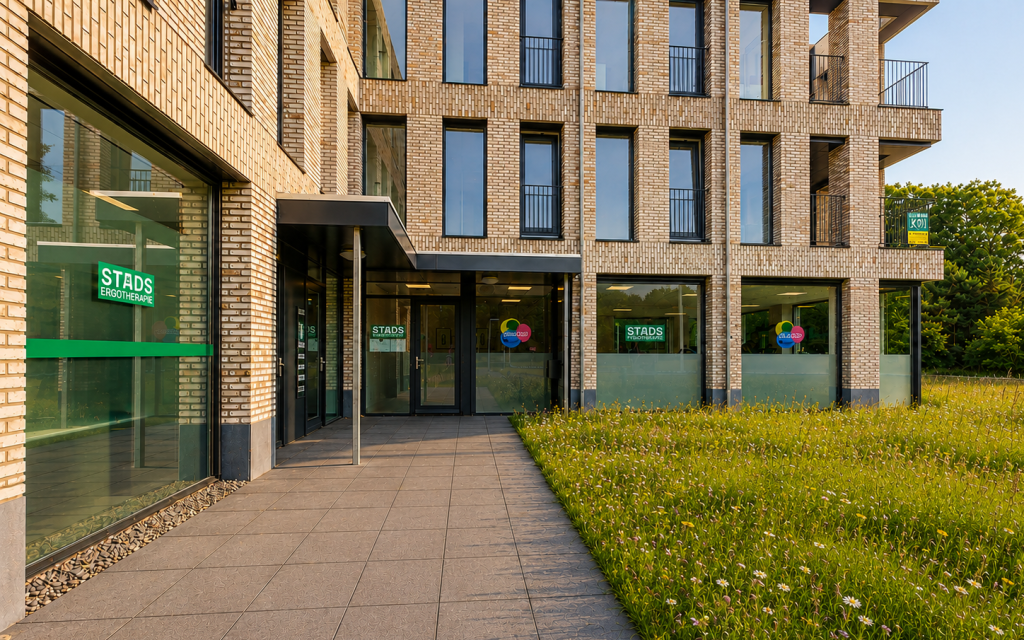
Right in the heart of the Reeshof, close to the A58 exit. Also easy to reach from the surrounding villages.
Address
Reeshofweg 40
5036 BK Tilburg
Mon to Fri, 08.00–18.00
Questions first?
Rather talk to someone first?
Not sure if we can help, or have a question about your treatment or reimbursement? Feel free to get in touch.
Call the practice
You’ll speak to one of us straight away. We’ll check the diary together there and then.
Leave your details
Fill in the contact form and we’ll get back to you as soon as possible.