

STADS Physiotherapy
Chronic pain
Understanding pain is the first step towards being able to do more again.
or call 040 – 311 1151 / 013 – 303 0361
No referral neededSeen within 48 hoursContracts with all health insurers
You’ve been in pain for months, maybe even years. You’ve tried all sorts of things, but the pain persists and increasingly decides what you can and can’t do. On this page you can read what chronic pain is, why pain can persist even though the tissue has already healed, and how the physiotherapists and occupational therapists at STADS work with you to help you get more control over your life.
What is chronic pain?
We speak of chronic pain when pain lasts longer than three months, or longer than the normal healing time of an injury or operation. It can be pain in one place, such as the back or neck, or pain in several places in your body. Chronic pain is common.
Pain is a protective signal from your nervous system. With a fresh injury that’s useful: it makes you spare the injured part of your body. But with long-lasting pain, the nervous system can become more sensitive. The alarm system is, as it were, set too sensitively. Ordinary movements or a light touch can then cause pain, even when there’s no new damage. This is also called central sensitisation.
Important to know: chronic pain is real. It’s not all in your head and you’re not imagining it. At the same time, with chronic pain, more pain usually doesn’t mean more damage. Pain and damage are not the same thing.
What symptoms can you have?
- Pain that has lasted longer than three months, in one or more places
- Pain that varies for no clear reason, or that spreads to other places
- Sensitivity to touch, cold or movement
- Tiredness and poor sleep
- Difficulty concentrating or feeling less comfortable in your own skin
- Doing less and less for fear the pain will get worse
Pain affects your whole life: your work, your relationships, your mood and your hobbies.
What causes chronic pain?
Chronic pain often starts with an injury, an operation, an illness or overload. Sometimes there’s no clear starting point. Why the pain goes away in one person and stays in another usually has more than one cause. Physical, psychological and social factors all play a part together.
Think of long-term stress, poor sleep, worries about the pain, previous traumatic experiences or problems at work. Unclear or contradictory explanations of what’s going on can also make the pain worse. If you think moving causes damage, you understandably start moving less. As a result, your fitness declines, your muscles get weaker and you become even more sensitive to pain.
This is where the balance between load and load capacity comes in. With chronic pain, your load capacity has often decreased. Many people recognise one of two patterns. The first is doing too much on a good day and then needing days to recover. The second is avoiding more and more for fear of pain. Both patterns keep the pain going. A stable, achievable level of activity that you build up step by step helps to break that cycle.
How long does it take?
Unfortunately, that can’t be predicted. Chronic pain doesn’t always disappear completely. In some people, the pain clearly decreases with the right approach. In others, some pain remains, but they learn to manage it so that it no longer rules their whole life.
Recovery from chronic pain is usually gradual, with ups and downs. A setback is part of it and doesn’t mean you have to start again. An active approach, in which you learn to understand what pain is and gradually do more again, gives the best results for many people. Above all, the goal is for you to be able to do what matters to you again.
When should you see a physiotherapist or occupational therapist?
- Your pain has lasted longer than three months and limits you in daily life
- You’ve started moving less or no longer dare to make certain movements
- You recognise the pattern of doing too much and then crashing
- Your work, household tasks or hobbies are becoming harder and harder
- You’ve already had a lot of treatment, but now want to take more control yourself
- You want to understand better why the pain persists
Can’t work it out on your own?
Our physiotherapists and occupational therapists are happy to help. In most cases you can come without a referral, in Eindhoven or Tilburg.
When should you see your GP straight away?
- The pain clearly changes in character or quickly gets much worse for no reason
- You also have a fever, unintended weight loss or feel ill
- You develop loss of strength, numbness in your legs or around your buttocks, or problems with passing urine or bowel movements
- You feel very low or have thoughts of harming yourself
How STADS helps with chronic pain
We take time to hear your story. How did the pain start, what have you already tried and what do you want to be able to do again? We look not only at your body, but also at sleep, stress, work and how you deal with the pain. Where needed, we coordinate with your GP or other healthcare providers.
Pain education is an important part of treatment. You learn how pain works and why pain can persist even though the tissue has healed. Many people find that moving becomes less daunting as a result. Together, we set concrete goals, such as being able to walk for an hour again, keeping up with your work or playing with your children.
With the physiotherapist, you work with graded activity or graded exposure. You start at an achievable level and expand it step by step according to plan, including movements you find daunting. You train your fitness and strength. If tension or stress plays a big part, psychosomatic physiotherapy may be a good fit, in which you also learn to relax and recognise your body’s signals.
At STADS, physiotherapists and occupational therapists work closely together. The occupational therapist helps you pace your energy, adapt activities and organise your day so that you can do more without overstepping your limits. Read more about occupational therapy for chronic pain. If your work plays a part, support with work and reintegration can help.
What can you do yourself?
- Keep moving, even when it hurts. Choose an amount you can also manage on a worse day.
- Build up activities according to plan, not based on how you feel that day.
- Keep a regular daily and sleep routine.
- Deliberately plan relaxation and things you enjoy into your week.
- Stay in touch with the people around you and, if possible, keep working or taking part in an adapted form.
- Be critical of treatments that promise a quick cure.
Read also
Related complaints
Good to know
Frequently asked questions
Do I need a referral?
No. In most cases you can come for physiotherapy and occupational therapy without a referral. We then start with a short screening to see whether you’re in the right place with us. Do you already have a diagnosis from your GP or specialist, or a referral? Feel free to bring it along. That helps us tailor the treatment well.
Is the treatment covered by my insurance?
That depends on your health insurance and your supplementary package. For some chronic conditions, a different arrangement applies under your basic insurance. For more information, see our page on reimbursements and rates, or check your policy with your insurer.
Does more pain mean more damage?
With chronic pain, usually not. Your nervous system has become more sensitive and sends a pain signal more quickly, even when there’s no new damage. That doesn’t make the pain any less real, but it does mean you can often safely do more than you think. Your physiotherapist helps you discover that step by step.
What’s the difference between physiotherapy and occupational therapy for chronic pain?
The physiotherapist focuses mainly on movement: pain education, building fitness and strength, and regaining the confidence to make movements. The occupational therapist focuses on your daily activities: pacing your energy, adapting tasks at home and at work, and finding an achievable rhythm. At STADS they work together, so the approaches fit together.
Why doesn’t rest work for chronic pain?
With a fresh injury, a short rest can help. With chronic pain, prolonged rest actually causes your fitness and strength to decline and your nervous system to become even more sensitive. As a result, you can do less and less. Calmly and gradually doing more again is usually the better way.
Our locations
Two practices, one team
In Eindhoven and Tilburg, physiotherapists and occupational therapists work together under one roof. Choose the practice that’s easiest for you.
Eindhoven

Centrally located on Geldropseweg, with spacious treatment rooms and a large exercise room. Easy to reach by bike, public transport and car.
Address
Geldropseweg 28
5611 SJ Eindhoven
Free parking behind the building
Tilburg
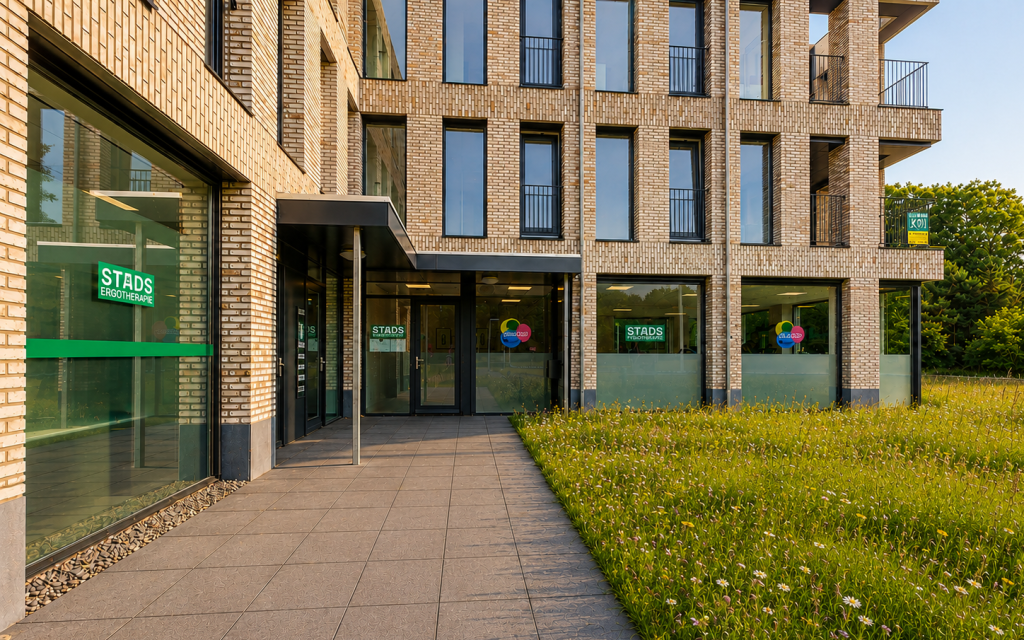
Right in the heart of the Reeshof, close to the A58 exit. Also easy to reach from the surrounding villages.
Address
Reeshofweg 40
5036 BK Tilburg
Mon to Fri, 08.00–18.00
Questions first?
Rather talk to someone first?
Not sure if we can help, or have a question about your treatment or reimbursement? Feel free to get in touch.
Call the practice
You’ll speak to one of us straight away. We’ll check the diary together there and then.
Leave your details
Fill in the contact form and we’ll get back to you as soon as possible.