
STADS Physiotherapy
Erb’s palsy (obstetric brachial plexus injury)
We guide the recovery of your baby’s arm calmly and carefully.
or call 040 – 311 1151 / 013 – 303 0361
No referral neededSeen within 48 hoursContracts with all health insurers
Your baby moves one arm less than the other, or the arm has hung limply by their side since birth. Perhaps the doctors have already mentioned Erb’s palsy or a plexus injury. On this page you’ll read what that means, how recovery often goes and what paediatric physiotherapy can do alongside the doctors’ care.
What is Erb’s palsy?
Erb’s palsy is a form of obstetric brachial plexus injury. That sounds complicated, but it means an injury to the nerves of the arm that happened during birth. The brachial plexus is a network of nerves that runs from the spinal cord in the neck to the shoulder, arm and hand. These nerves control the muscles and provide sensation.
In Erb’s palsy, it’s mainly the upper nerves of that network that are affected. As a result, your baby can’t move the shoulder and elbow as well. The arm often lies straight along the body, turned inwards, while the hand and fingers usually do move. Sometimes lower nerves are involved too and the hand is also weaker.
How serious the injury is varies a lot. In some babies, the nerves have only been stretched and recover by themselves. In others, the damage is greater. The diagnosis and follow-up plan are in the hands of the doctor, often working with a specialist plexus team.
What signs might you see?
- Your baby moves one arm less or not at all, especially at the shoulder and elbow.
- The arm lies straight along the body, turned inwards.
- Your baby mainly reaches or grasps with the other hand.
- When you lift or change your baby, the arm seems to hang limply.
- Sometimes the hand or wrist is weaker too, or there are changes in sensation.
- In older children, the shoulder may not turn outwards or lift as far.
What causes Erb’s palsy?
Erb’s palsy happens during delivery, when the nerves in the baby’s neck and shoulder are stretched. This can happen, for example, if the baby’s shoulder gets caught behind the mother’s pubic bone, a situation called shoulder dystocia. To deliver the baby safely, extra force is then sometimes needed, which can stretch the nerves.
There are factors that increase the risk, such as a high birth weight, diabetes during pregnancy, a long or difficult labour, a breech position or an assisted delivery. Even so, a plexus injury can also happen in births without any known risk factors. It can almost never be predicted and usually can’t be prevented.
Depending on how much damage there is, the nerves can recover. Nerves grow back slowly. During that recovery, it’s important that the shoulder and arm stay supple and that your baby learns to use the arm as much as possible. If an arm is used less for a long time, muscles can shorten and the shoulder can become stiffer. The child may also ‘forget’ the arm when playing. You can keep an eye on this together with the paediatric physiotherapist.
How long does it last?
The course varies a lot from child to child. Many babies already show clear recovery in the first weeks to months, and a large proportion recover well. In some children, recovery is slower or remains incomplete. A specialist team can then assess whether surgery on the nerves, or later on the shoulder, would be worthwhile.
Nerve recovery can continue for months or even years. That’s why your child is usually checked regularly, especially in the first year of life. Only the treatment team can estimate how things will go for your child, and they too often wait to see how it develops.
When should you see a paediatric physiotherapist?
- Your baby has Erb’s palsy and the doctor advises starting paediatric physiotherapy.
- You want to know the best way to pick up, dress and lay down your baby.
- You’re looking for ways to encourage your baby to use the affected arm.
- You notice that the shoulder or elbow is getting stiffer, or that the arm is falling behind in its development.
- Your child is older and still has limitations in play, sport or self-care.
Can’t work it out on your own?
Our physiotherapists and occupational therapists are happy to help. In most cases you can come without a referral, in Eindhoven or Tilburg.
When should you see your GP or treating doctor?
Always have a baby who moves one arm less after birth assessed by a doctor; reduced movement in an arm can also have other causes, such as a broken collarbone. Contact your GP (huisarts) or treating doctor if recovery stalls or goes backwards, if the arm or shoulder seems painful, or if your baby is feeding poorly, has a fever or cries a lot when the arm is moved.
How STADS helps with Erb’s palsy
Paediatric physiotherapy for Erb’s palsy complements the care of your GP, paediatrician or the specialist plexus team. With your permission, we coordinate with them, so that the support we give fits in well with the team’s check-ups and plan.
We start with a conversation about the birth, how things have gone so far and what you see at home. Then we assess how your baby moves: which muscles are already active, how mobile the shoulder and elbow are and how your baby uses the arm in play. That way we can follow the recovery closely and pass it on to the treatment team.
Our paediatric physiotherapists teach you how to pick up, dress and lay down your baby safely, so the arm is well supported. We show you how to gently keep the shoulder and arm supple and how to involve the affected arm in play, for example by offering toys on that side. As your baby grows, we practise reaching, supporting, crawling and later playing, sport and everyday tasks.
As your child gets older and questions come up about self-care, writing or play, our paediatric occupational therapist can help.
What can you do yourself?
- Support the affected arm well when you pick your baby up, and don’t pull on the arm.
- When dressing, put the affected arm into the sleeve first, and when undressing, take it out last.
- Offer toys and attention on the side of the affected arm too, so your baby looks and reaches that way.
- Do the stretching exercises the paediatric physiotherapist or team teaches you, gently and without forcing.
- When your baby is awake, regularly place them on their tummy, under supervision, so they learn to support themselves on both arms.
- Keep your check-up appointments with the treatment team, even if things seem to be going well.
Read also
Related complaints
Good to know
Frequently asked questions
Does Erb’s palsy heal by itself?
In many babies, the arm recovers largely or completely in the first weeks to months. In some children, recovery is slower or remains incomplete. That’s why your baby is checked regularly by the doctor or a specialist plexus team. Paediatric physiotherapy helps keep the arm supple and encourages your baby to use the arm during recovery.
Is surgery needed?
That depends on how recovery goes. If the arm doesn’t recover enough in the first few months, a specialist team assesses whether surgery on the nerves would be worthwhile. Later on, shoulder surgery may sometimes be considered. That decision always lies with the treating doctors. We follow the recovery and pass our findings on to them.
Can I pick up and dress my baby as normal?
Yes, with a little care. Support the affected arm, lift your baby under the armpits or around the body and don’t pull on the arm. When dressing, put the affected arm into the sleeve first, and when undressing, take it out last. Our paediatric physiotherapist will be happy to show you the easiest and safest way to do this.
Do I need a referral for paediatric physiotherapy?
No. In most cases you can come to us without a referral. We then start with a short screening to check whether paediatric physiotherapy suits your child’s needs. The same applies to paediatric occupational therapy. Sometimes we ask for information from your GP, youth health doctor or specialist, for example if your child has been assessed before. That way we build on what is already known.
Is the treatment covered by my insurance?
That depends on the insurance and any supplementary package. For children under 18, paediatric physiotherapy is often (partly) covered by the basic insurance, for a limited number of treatments per year. For some chronic conditions, a different arrangement applies. Paediatric occupational therapy is also often covered by the basic insurance for a number of hours per year. For more information, see reimbursements and rates or just ask us.
Our locations
Two practices, one team
In Eindhoven and Tilburg, physiotherapists and occupational therapists work together under one roof. Choose the practice that’s easiest for you.
Eindhoven

Centrally located on Geldropseweg, with spacious treatment rooms and a large exercise room. Easy to reach by bike, public transport and car.
Address
Geldropseweg 28
5611 SJ Eindhoven
Free parking behind the building
Tilburg
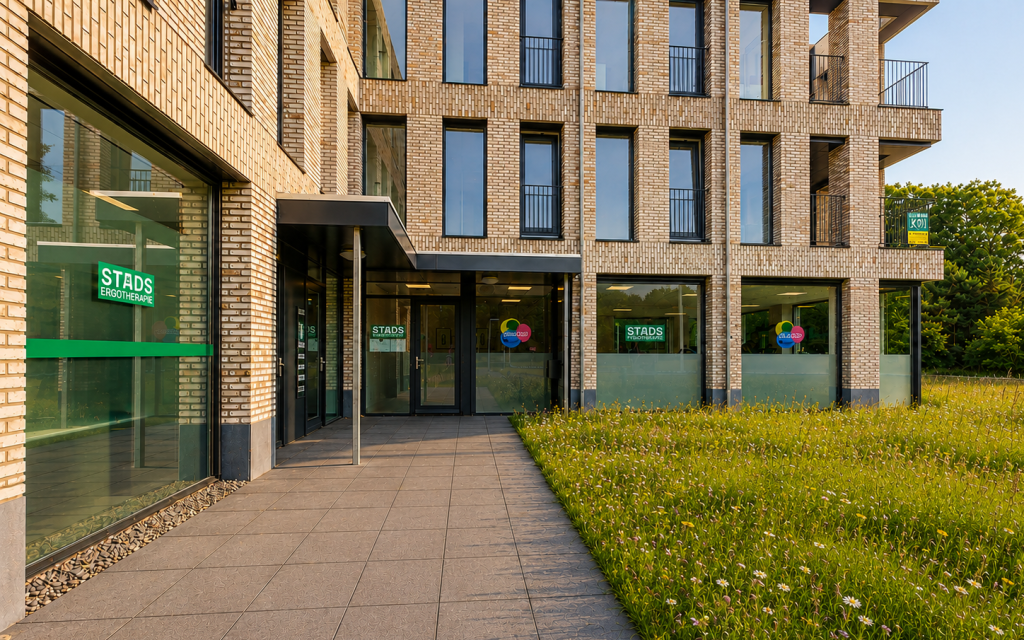
Right in the heart of the Reeshof, close to the A58 exit. Also easy to reach from the surrounding villages.
Address
Reeshofweg 40
5036 BK Tilburg
Mon to Fri, 08.00–18.00
Questions first?
Rather talk to someone first?
Not sure if we can help, or have a question about your treatment or reimbursement? Feel free to get in touch.
Call the practice
You’ll speak to one of us straight away. We’ll check the diary together there and then.
Leave your details
Fill in the contact form and we’ll get back to you as soon as possible.