

STADS Physiotherapy
Positional preference in babies
With small changes in daily life, you help your baby discover both sides.
or call 040 – 311 1151 / 013 – 303 0361
No referral neededSeen within 48 hoursContracts with all health insurers
You notice that your baby almost always turns their head the same way, or that the back of the head is getting flatter on one side. This is common and in most cases easy to guide. On this page you’ll read what positional preference is, how it develops, what you can do yourself and when paediatric physiotherapy can help.
What is positional preference?
With positional preference, a baby always lies in the same position, usually with the head turned to one side. Sometimes the body is also slightly curved, like a banana. A slight preference is completely normal in the first weeks. We call it positional preference when the baby clearly turns to the other side less or not at all, even when there’s something interesting to see.
A baby’s skull is still soft and can change shape. If the head often rests in the same spot, it can flatten a little there. This is called flattening or plagiocephaly. Flattening caused by lying position isn’t harmful to the brain and doesn’t affect the development of thinking.
Sometimes a stiff or shortened neck muscle plays a part, making it harder to turn to one side. This is called torticollis. Here too, paediatric physiotherapy can often help well.
What signs can you see?
- Your baby almost always turns their head to the same side, also in the playpen or in your arms.
- The back of the head is getting flatter on one side; sometimes an ear or the forehead sits slightly forward.
- Your baby feeds more easily on one breast or in one position.
- When lying on their back, your baby’s body keeps curving to the same side.
- Your baby uses their hands unevenly or mainly looks to one side.
- Your baby really dislikes lying on their tummy.
What causes positional preference?
Sometimes it starts in the womb, if the baby lay in a certain position for a long time, for example because of limited space or a breech position. After birth, a slight preference can then persist. A difficult delivery or a stiff neck muscle can also play a part.
The environment also plays a role. Babies turn their heads towards light, sound and people. If the cot always has the same side facing the window or door, or the baby is always spoken to from the same side, that side naturally becomes the favourite. The more often a baby looks one way, the more familiar and easier that side becomes.
Important to know: babies sleep safely on their backs, and that advice always applies. Because babies spend a lot of time on their backs, also in a bouncer and car seat, the head often rests in the same spot. That’s why it’s so important that during the day, when your baby is awake, they also spend time in other positions, such as on the tummy and on the side, and are carried a lot.
Positional preference can temporarily hold back a child’s motor development a little, for example when rolling over or playing with both hands. With timely attention, this can usually be made up well.
How long does it last?
In many babies, positional preference improves within a few weeks to months, especially if you start working on it early. Around the age when a baby can lift their head better, starts rolling and sitting, the head naturally rests on the mattress less and things get easier.
Flattening of the back of the head often improves gradually as your baby moves more and the head grows. Slight flattening can remain visible, but is usually barely noticeable later on, especially once the hair has grown. How quickly it goes varies from child to child.
When should you see a paediatric physiotherapist?
- After a few weeks of following advice, your baby still mainly turns their head to one side.
- The flattening of the head is becoming more obvious, or you’re worried about the shape.
- Your baby finds it hard to turn their head to one side or holds it tilted.
- Tummy time hardly works or your baby cries a lot during it.
- The child health clinic (consultatiebureau) advises having a paediatric physiotherapist take a look.
Can’t work it out on your own?
Our physiotherapists and occupational therapists are happy to help. In most cases you can come without a referral, in Eindhoven or Tilburg.
When should you see the child health clinic or your GP?
Contact the child health clinic or your GP if you feel a hard swelling in the neck, if the shape of the head looks very different from flattening at the back, for example a narrow, long or pointed head, or if the fontanelle is bulging. Also if your baby clearly moves one arm or leg less, feeds poorly or feels very floppy or stiff, have your baby assessed by a doctor first.
How STADS helps with positional preference
We start with a conversation about the pregnancy, the birth, feeding and sleeping, and what you see at home. Then we examine your baby calmly and playfully. We look at neck mobility, the shape of the head, posture and motor development. That way we can judge what’s causing the positional preference and whether a stiff neck muscle plays a part.
We explain what we see and what you can expect. Then you get practical advice that fits easily into your family’s daily life: how to lay down, pick up, carry, feed and talk to your baby, so they naturally turn to the other side more often.
Our paediatric physiotherapists show you how to build up tummy time step by step, even if your baby doesn’t like it at first. If a stiff neck muscle plays a part, we teach you gentle exercises to make the neck more supple. We follow your baby’s development and the shape of the head, and adjust where needed. The aim is for your baby to use both sides easily and develop freely.
If there’s any doubt about the skull shape or other medical questions, we consult the child health clinic or your GP.
What can you do yourself?
- Always put your baby to sleep on their back, and alternate the direction in the cot, so your baby looks to the other side in turn.
- During the day, when your baby is awake, regularly put them on their tummy under supervision, and build this up gently.
- Talk to your baby and offer toys from the less favoured side.
- Alternate sides when feeding, carrying and changing.
- Limit time in the bouncer, car seat and playpen, and carry your baby upright more often or in a sling with good support.
Read also
Related complaints
Good to know
Frequently asked questions
Is a flat head harmful for my baby?
No. Flattening caused by lying position isn’t harmful to the brain and doesn’t affect intellectual development. It’s mainly a matter of shape. With the right advice, and as your baby starts moving more, the shape often improves gradually. Slight flattening can remain visible, but is usually barely noticeable later on.
Does my baby need a helmet?
In the Netherlands, a helmet for flattening caused by lying position is usually not recommended. Research showed that the result with a helmet is often not clearly better than without, while a helmet can cause discomfort. Positioning advice and, where needed, paediatric physiotherapy are the first step. If you’re unsure, discuss it with the child health clinic or your GP.
Can my baby sleep on their tummy to reduce the flattening?
No. Always let your baby sleep on their back; that’s the safest. Tummy time is very good during the day, though, when your baby is awake and you’re there. That way your baby exercises the muscles of the neck, back and shoulders, and the head rests in the same spot less. Start with short moments and build up gently.
Do I need a referral for paediatric physiotherapy?
No. In most cases you can come to us without a referral. We then start with a short screening to check whether paediatric physiotherapy suits your child’s needs. The same applies to paediatric occupational therapy. Sometimes we ask for information from the GP, youth health doctor or specialist, for example if your child has been examined before. That way we build on what’s already known.
Is the treatment covered by my insurance?
That depends on the insurance and any supplementary package. For children under 18, paediatric physiotherapy is often (partly) covered by the basic insurance, for a limited number of treatments per year. For some chronic conditions, a different arrangement applies. Paediatric occupational therapy is also often covered by the basic insurance for a number of hours per year. For more information, see our page on reimbursements and rates or feel free to ask us.
Our locations
Two practices, one team
In Eindhoven and Tilburg, physiotherapists and occupational therapists work together under one roof. Choose the practice that’s easiest for you.
Eindhoven

Centrally located on Geldropseweg, with spacious treatment rooms and a large exercise room. Easy to reach by bike, public transport and car.
Address
Geldropseweg 28
5611 SJ Eindhoven
Free parking behind the building
Tilburg
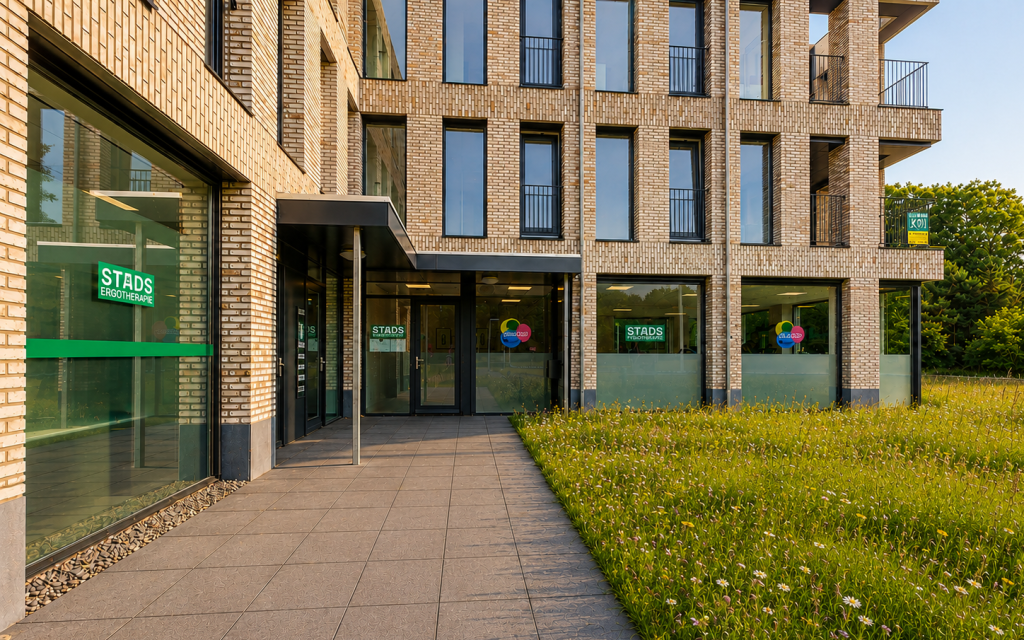
Right in the heart of the Reeshof, close to the A58 exit. Also easy to reach from the surrounding villages.
Address
Reeshofweg 40
5036 BK Tilburg
Mon to Fri, 08.00–18.00
Questions first?
Rather talk to someone first?
Not sure if we can help, or have a question about your treatment or reimbursement? Feel free to get in touch.
Call the practice
You’ll speak to one of us straight away. We’ll check the diary together there and then.
Leave your details
Fill in the contact form and we’ll get back to you as soon as possible.