

STADS Physiotherapy
Motor development delay
Every child learns to move at their own pace, and we’re happy to help you keep an eye on it.
or call 040 – 311 1151 / 013 – 303 0361
No referral neededSeen within 48 hoursContracts with all health insurers
You notice that your child starts rolling, sitting, crawling or walking later than other children. Or you see that your toddler or preschooler falls more often, is less keen on climbing or finds jumping and cycling difficult. On this page you’ll read what a motor development delay is, why children differ so much in this and when paediatric physiotherapy can help.
What is a motor development delay?
Motor skills cover everything to do with movement. Gross motor skills are about large movements with the whole body, such as rolling, sitting, crawling, walking, running and jumping. Fine motor skills are about the small movements of the hands and fingers.
Children learn to move in a fixed order, but not to a strict timeline. Most children, for example, walk independently somewhere between about 9 and 18 months. That’s a wide range, and anything within it is normal. Some children also skip a step, such as crawling, and go on to develop perfectly well.
We speak of a motor development delay when a child reaches their movement milestones clearly later than you would expect at their age, or when the quality of their movement stands out. A delay is a description of what we see, not a diagnosis. It says nothing yet about the cause, or about how things will develop.
What signs might you see?
- Your baby hardly holds up their head yet or doesn’t roll over, while babies of the same age do.
- Your child sits, crawls or walks clearly later than most children.
- Your child feels floppy or, on the contrary, very stiff when you pick them up.
- Your toddler or preschooler falls often, trips easily or tires quickly when moving.
- Running, jumping, climbing stairs or climbing go less well than for peers.
- Your child avoids active play or prefers only quiet activities.
What causes a motor development delay?
Often no clear cause can be found. Many children simply have their own, somewhat slower pace. Temperament plays a part too: a cautious child who likes to watch first sometimes tries new movements later.
Children may also get less movement experience than they need. For example, if they spend a lot of time in a bouncer, car seat or playpen, play little on their tummy, or have fallen a little behind after a period of illness or a hospital stay. With more chances to practise, a child often catches up.
Physical factors can play a part, such as premature birth, low muscle tone, very flexible joints, being overweight or a positional preference in the first months. Problems with sight or hearing can also affect movement.
Sometimes a motor development delay is a first sign of an underlying condition, such as a neurological or muscle disorder, a syndrome or a wider developmental delay. That isn’t often the case, but it is the reason why it’s important for a paediatric physiotherapist, GP or youth health doctor (jeugdarts) to keep a close eye on things if the delay persists.
How long does it last?
That depends mainly on the cause. Children who simply need a bit more time or more chances to practise often catch up, sometimes within a few months. Children with an underlying condition usually need support for longer and develop in their own way.
We can’t promise a timeframe in advance. What we do is regularly review your child’s development. That way, you and we can see together whether your child is making progress, and we can adjust the approach. Sometimes, after a few appointments and good advice, it’s already clear that your child will pick things up well on their own.
When should you see a paediatric physiotherapist?
- Your child is still clearly behind at the end of the normal range, for example not yet walking independently at around 18 months.
- You’re unsure whether your child moves well, for example because they feel floppy, stiff or lopsided.
- Your child clearly uses one side of their body less.
- Your toddler or preschooler falls much more often than peers or can’t keep up when playing outside or in PE.
- The child health clinic (consultatiebureau), the youth health doctor or the nursery staff advise having your child’s motor skills checked.
Can’t work it out on your own?
Our physiotherapists and occupational therapists are happy to help. In most cases you can come without a referral, in Eindhoven or Tilburg.
When should you see your GP, the child health clinic or the youth health doctor?
Contact your GP or youth health doctor straight away if your child loses skills they had already mastered, suddenly becomes floppier or weaker, or if one arm or leg moves clearly differently from the other side. If your baby feeds poorly, is very floppy or makes little contact, have a doctor assess this first too. If in doubt, just give them a call.
How STADS helps with a motor development delay
We start with a relaxed conversation with you about the pregnancy, the birth, development so far and your concerns. Then we look at how your child moves, preferably during play, because that’s when a child shows the most. Where useful, we use a standardised motor skills test. That way we can compare development with that of peers and follow it closely later on.
Then we tell you what we see and what we think it means. Sometimes the advice is to wait and see, with some practical tips. Sometimes support is useful. Then we set goals together that suit your family, for example sitting up independently, walking without help or joining in on the playground.
Our paediatric physiotherapists work in a playful, goal-oriented way. Your child practises with challenging games and movements that are just a little harder than what they can already do. We build this up gradually. You learn how to encourage development at home during care and play, without it feeling like homework.
If there are also questions about fine motor skills, independence or sensory processing, we work with our colleagues from paediatric occupational therapy and sensory integration therapy. If we find signs that need medical examination, we discuss this with you and coordinate with the GP or youth health doctor.
What can you do yourself?
- When your baby is awake, regularly put them on their tummy, under supervision, and always let them sleep on their back.
- Limit time in the bouncer, car seat and playpen, and give your child plenty of free space on the floor.
- Put toys just out of reach, so your child is challenged to roll, reach or crawl.
- Take your toddler or preschooler outside a lot: climbing, running, swinging and cycling are ideal exercises.
- Let your child move around barefoot at home; it helps balance and sensation.
- Try not to compare too much with other children, and enjoy every step your child takes.
Good to know
Frequently asked questions
My child doesn’t crawl. Is that a problem?
Usually not. Some children skip crawling and, for example, bottom-shuffle, pull themselves up or go straight to walking. As long as your child finds other ways to get around, uses both sides of their body well and keeps developing, there is generally no reason for concern. If in doubt, we’re happy to take a look.
When should my child walk independently?
Most children walk independently somewhere between about 9 and 18 months. That’s a wide range, and that’s normal. If your child isn’t walking independently at around 18 months, or you’re worried for another reason, discuss it with the child health clinic or have your child examined by a paediatric physiotherapist.
How often does my child need to come?
That differs per child and per question. Sometimes an assessment with advice is enough and we see your child again after a few months for a check-up. For other children, a course of treatment is useful. We always discuss this together with you and adjust it as your child makes progress. What happens at home is at least as important as the treatment with us.
Do I need a referral for paediatric physiotherapy?
No, in most cases you can come to us without a referral. We start with a short screening to check whether paediatric physiotherapy suits your child’s needs. The same applies to paediatric occupational therapy. Sometimes we ask for information from the GP, youth health doctor or specialist, for example if your child has been examined before. That way we build on what is already known.
Is the treatment covered by my insurance?
That depends on the insurance and any supplementary package. For children under 18, paediatric physiotherapy is often (partly) covered by the basic insurance, for a limited number of treatments per year. For some chronic conditions, a different arrangement applies. Paediatric occupational therapy is also often covered by the basic insurance for a number of hours per year. For more information, see our page on reimbursements and rates or feel free to ask us.
Our locations
Two practices, one team
In Eindhoven and Tilburg, physiotherapists and occupational therapists work together under one roof. Choose the practice that’s easiest for you.
Eindhoven

Centrally located on Geldropseweg, with spacious treatment rooms and a large exercise room. Easy to reach by bike, public transport and car.
Address
Geldropseweg 28
5611 SJ Eindhoven
Free parking behind the building
Tilburg
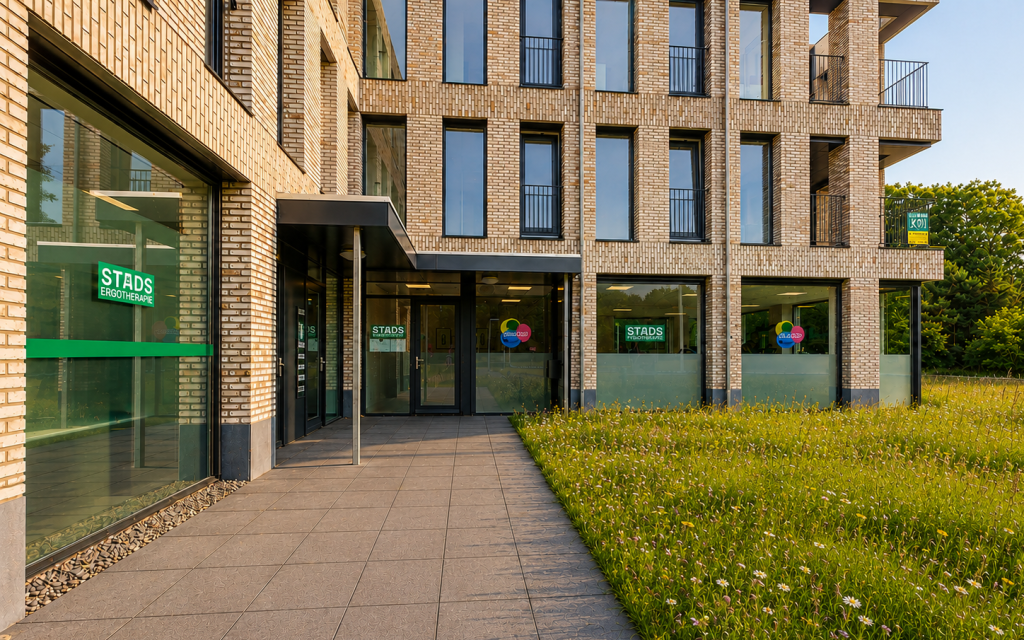
Right in the heart of the Reeshof, close to the A58 exit. Also easy to reach from the surrounding villages.
Address
Reeshofweg 40
5036 BK Tilburg
Mon to Fri, 08.00–18.00
Questions first?
Rather talk to someone first?
Not sure if we can help, or have a question about your treatment or reimbursement? Feel free to get in touch.
Call the practice
You’ll speak to one of us straight away. We’ll check the diary together there and then.
Leave your details
Fill in the contact form and we’ll get back to you as soon as possible.