

STADS Physiotherapy
Bottom shuffling
Every child finds their own way to walking, even on their bottom.
or call 040 – 311 1151 / 013 – 303 0361
No referral neededSeen within 48 hoursContracts with all health insurers
Your child doesn’t crawl, but happily shuffles around the room on their bottom. Handy and often quick too, but you may wonder whether it’s normal and whether your child will start walking on time. On this page you can read what bottom shuffling is, why some children do it and when it’s wise to have a paediatric physiotherapist take a look.
What is bottom shuffling?
Bottom shuffling is a way of getting around in which a child sits upright and pulls or pushes themselves forward across the floor with their legs and sometimes their hands. Instead of crawling on hands and knees, the child shuffles around the house on their bottom.
Bottom shuffling is fairly common and for most children it’s simply another perfectly good way of getting around. Not all children develop according to the same plan. Some children crawl, others shuffle, roll or go almost straight to standing and walking.
We do know that bottom shufflers start walking a little later on average than children who crawl. Standing and bearing weight on their feet often feels less natural to them, and they sometimes need a bit more time to get used to it. In a small number of children, bottom shuffling is linked to low muscle tone or a broader motor delay. That’s why it’s good to look at the overall picture.
What might you notice?
- Your child moves across the floor sitting up instead of on hands and knees.
- Your child doesn’t like lying on their tummy or supporting themselves on hands and knees.
- When you lift your child, they pull their legs up or hardly want to stand on their feet.
- Your child pulls up to standing later than other children their age.
- Your child walks independently a little later, but is otherwise developing well.
What causes bottom shuffling?
There’s usually no clear cause. Often a child simply chooses the way that feels most comfortable. Bottom shuffling sometimes runs in families: quite often a parent, brother or sister turns out to have shuffled too.
Little tummy time in the first months can play a part. A baby who hasn’t spent much time on their tummy has less experience of supporting themselves on their arms and may therefore find lying on their tummy and crawling unpleasant. Spending a lot of time in a bouncer or baby seat can also play a part.
Physical factors can encourage bottom shuffling, such as somewhat lower muscle tone, very flexible joints or a child who doesn’t like putting their hands or feet on certain surfaces. Sometimes bottom shuffling goes together with a general motor development delay or another developmental issue. That’s by no means always the case, but it is a reason to look carefully if your child is also behind in other areas or if walking takes a very long time to come.
How long does it take?
Most bottom shufflers eventually walk perfectly well, often a little later than crawlers. Your child may not walk independently until some time in their second year, or a little later. That’s not unusual for bottom shufflers.
How long it takes varies per child. What matters is that your child keeps developing, for example standing more, cruising along furniture and daring to put more and more weight on their legs. If a long period passes without progress, or there are other concerns too, it’s wise to have their development assessed.
When should you see a paediatric physiotherapist?
- Your child isn’t walking independently at around 18 months and you want to know whether their development is on track.
- Your child hardly wants to stand on their legs or keeps pulling them up.
- Your child feels floppy or is also behind their peers in other areas.
- Your child always shuffles with one side leading or clearly uses one arm or leg less.
- The child health clinic (consultatiebureau) advises having their motor skills checked.
Can’t work it out on your own?
Our physiotherapists and occupational therapists are happy to help. In most cases you can come without a referral, in Eindhoven or Tilburg.
When should you see the child health clinic or your GP?
Contact the child health clinic or your GP if your child loses skills they could already do, if your child is very floppy, if one side of the body moves clearly differently, or if there are also concerns about speech, social contact or overall development. If your child still isn’t walking at around 2 years, it’s also wise to have a doctor take a look.
How STADS helps with bottom shuffling
We start with a conversation about your child’s development so far and what you see at home. Then we look at how your child moves during play. We pay attention to muscle tone, strength, balance and how your child uses their legs. Where needed, we use a standardised motor skills test. That gives us a good picture of their development and lets us judge whether the bottom shuffling fits a healthy route of their own or whether something more is going on.
We explain what we see. Often the reassuring answer is that your child is developing well and mainly needs a bit more time and challenge. We then give you practical advice and play ideas for home.
If support would be useful, our paediatric physiotherapists work playfully on standing, bearing weight on the legs, pulling up, cruising along furniture and eventually walking independently. We build this up step by step, at a pace that suits your child. You learn how to encourage this naturally at home.
If it seems your child doesn’t like the feel of certain surfaces, sensory integration therapy can be a useful addition. If we see signs that call for medical investigation, we discuss this with you and coordinate with the child health clinic or your GP.
What can you do yourself?
- Let your child play barefoot on different surfaces, such as grass, sand, carpet and a cushion.
- Regularly stand your child against the sofa with toys on it, so they naturally start standing.
- Let your child play sitting on a low stool with their feet flat on the floor.
- Offer tummy time and play on hands and knees, for example over your legs or a rolled-up towel.
- Don’t use a baby walker; let your child explore on their own with support from furniture or a sturdy push-along walker instead.
- Try not to compare too much with other children, and give your child time.
Read also
Related complaints
Good to know
Frequently asked questions
Is bottom shuffling bad for development?
No. For most children, bottom shuffling is simply another way of getting around. Bottom shufflers do walk a little later on average, but are otherwise usually developing well. It only becomes a point of attention if your child is also behind in other areas, is very floppy or uses one side less. Then it’s good to have their development assessed.
Should I teach my child to crawl?
There’s no need. Crawling isn’t a required step for learning to walk well. You can play games where your child supports themselves on hands and knees or plays on their tummy, because that builds strength in the arms and trunk. More important is that your child gets plenty of challenge to stand up and bear weight on their legs.
When will a bottom shuffler start walking?
That varies per child. Bottom shufflers often walk independently a little later than crawlers, sometimes during their second year or a little later. As long as your child is making progress, for example standing more often and cruising along furniture, that’s usually no cause for concern. If your child isn’t walking at around 18 months, we’re happy to take a look.
Do I need a referral for paediatric physiotherapy?
No. In most cases you can come to us without a referral. We then start with a short screening to see whether paediatric physiotherapy suits your child’s needs. The same applies to paediatric occupational therapy. Sometimes we ask for information from the GP, youth doctor or specialist, for example if your child has been assessed before. That way we build on what’s already known.
Is the treatment covered by my insurance?
That depends on the insurance and any supplementary package. For children under 18, paediatric physiotherapy is often (partly) covered by the basic insurance, for a limited number of treatments per year. For some chronic conditions, a different arrangement applies. Paediatric occupational therapy is also often covered by the basic insurance for a number of hours per year. For more information, see reimbursements and rates or feel free to ask us.
Our locations
Two practices, one team
In Eindhoven and Tilburg, physiotherapists and occupational therapists work together under one roof. Choose the practice that’s easiest for you.
Eindhoven

Centrally located on Geldropseweg, with spacious treatment rooms and a large exercise room. Easy to reach by bike, public transport and car.
Address
Geldropseweg 28
5611 SJ Eindhoven
Free parking behind the building
Tilburg
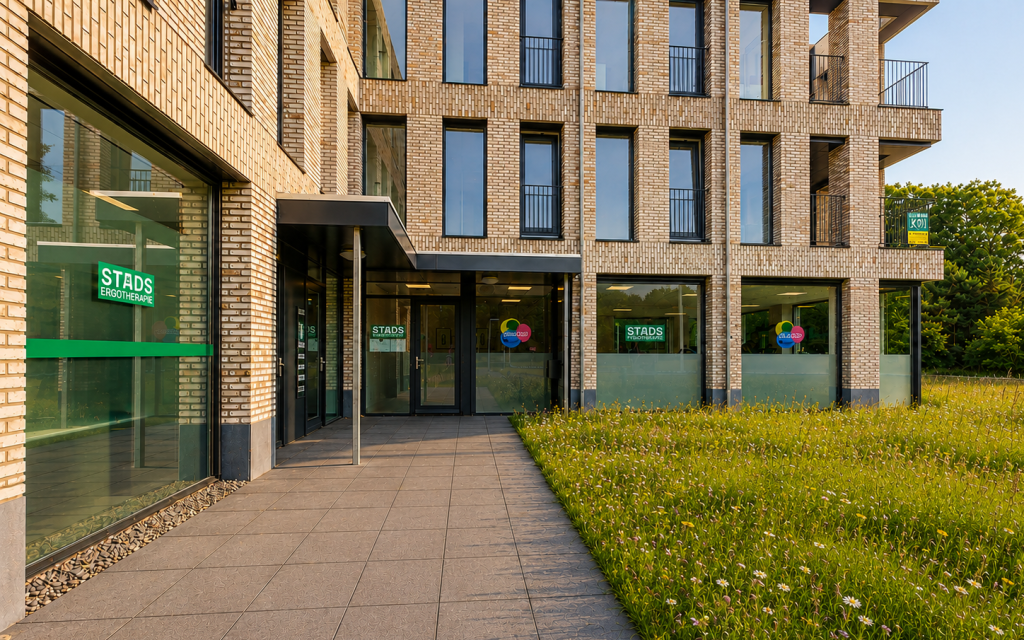
Right in the heart of the Reeshof, close to the A58 exit. Also easy to reach from the surrounding villages.
Address
Reeshofweg 40
5036 BK Tilburg
Mon to Fri, 08.00–18.00
Questions first?
Rather talk to someone first?
Not sure if we can help, or have a question about your treatment or reimbursement? Feel free to get in touch.
Call the practice
You’ll speak to one of us straight away. We’ll check the diary together there and then.
Leave your details
Fill in the contact form and we’ll get back to you as soon as possible.