

STADS Physiotherapy
Hypermobility in children (0-18 years)
Being flexible is great, and with strong muscles around the joints it’s even better.
or call 040 – 311 1151 / 013 – 303 0361
No referral neededSeen within 48 hoursContracts with all health insurers
Your child is unusually flexible, can bend their thumb back to their forearm or straighten their knees further than other children. Perhaps they complain of sore legs after playing, tire quickly or often sprain an ankle. On this page you’ll read what hypermobility is, when it causes problems and how paediatric physiotherapy can help.
What is hypermobility?
With hypermobility, joints can move further than average. This is because the connective tissue, such as the ligaments and the capsule around the joints, is a bit more elastic. Children are naturally more flexible than adults, and in some children that mobility is especially large. It is more common in girls and often runs in the family.
Hypermobility in itself is not a disease. Many flexible children have no problems with it at all, and some even benefit from it, for example in gymnastics or dance. As children get older, their mobility usually decreases a little. It only needs attention when your child develops symptoms. The joints then need more stability from the muscles, and if strength or control is still lacking, this can lead to pain, tiredness or injuries. To measure the degree of mobility, healthcare professionals often use a short test with a number of movements, called the Beighton score.
What symptoms can your child have?
- Pain in the legs or joints, often after exercise or at the end of the day
- Tiring quickly when walking, playing or writing
- Frequently spraining ankles or other minor injuries
- Clumsy movement, falling often or difficulty with balance
- Sore hands when writing or doing crafts
- Sitting in unusual positions, such as W-sitting or with the knees overstretched
What causes hypermobility?
Hypermobility is usually present from birth. The make-up of connective tissue is inherited, which is why you often see it in several family members. You can’t prevent it, and it isn’t something your child is doing wrong.
Whether hypermobility causes problems depends mainly on the balance between load and load capacity. Load is what your child does in a day: walking, playing, sport, writing. Load capacity is what the body can handle. With hypermobility, muscles have to work harder to keep the joints stable. If your child still has little strength, stamina or body awareness, that limit is reached sooner. That’s when pain and tiredness appear.
Symptoms sometimes increase during periods of rapid growth, with a sudden increase in sport or, on the contrary, after a period of little activity. Avoiding movement for fear of pain can also make symptoms worse over time, because the muscles become weaker.
Sometimes hypermobility is part of a broader connective tissue disorder, such as a form of Ehlers-Danlos syndrome or Marfan syndrome. This is rare. If in doubt, a doctor makes the diagnosis, not the physiotherapist.
How long does it last?
The flexibility itself often remains to a greater or lesser extent, although in many children it decreases with age. The symptoms that come with it can be influenced well, though. Many children notice less pain and tiredness as their muscles get stronger and they learn to pace themselves better.
How quickly that happens differs from child to child. Building strength and control takes time, usually a few months. There may be periods when the symptoms increase again for a while, for example during a growth spurt or with a new sport. That’s normal and doesn’t mean things are going wrong.
When should you see a paediatric physiotherapist?
- Your child regularly has pain in their legs or joints after activity
- Your child tires more quickly than peers and drops out of play or sport sooner
- Your child often sprains an ankle or regularly picks up minor injuries
- Your child has pain or tiredness in their hand when writing
- Your child avoids activity or sport because of pain
- Your child seems clumsy or falls often
Can’t work it out on your own?
Our physiotherapists and occupational therapists are happy to help. In most cases you can come without a referral, in Eindhoven or Tilburg.
When should you see your GP?
Contact your GP if your child:
- Has a joint that is swollen, red or warm, or also has a fever
- Is stiff for a long time in the morning or wakes up at night from pain
- Has had a dislocated joint
- Has very stretchy or fragile skin, bruises very easily or has wounds that heal poorly
- Is noticeably tall and slim with long fingers, or if connective tissue disorders or heart problems at a young age run in the family
How STADS helps with hypermobility
At STADS, we start with a proper conversation. What is bothering your child, when and how often? What would they like to be able to do again? With teenagers, we also talk about this with the young person themselves. Then we examine the mobility of the joints, strength, balance and motor skills. We also look at how your child sits, walks and plays.
We explain what hypermobility is and why it causes problems for your child. That helps you understand the pain better. Here, pain usually doesn’t mean something is being damaged, but that the body is signalling that the load was a bit too much. Together we set achievable goals, such as getting through a whole school day without pain again or joining in at the sports club.
The treatment consists mainly of exercise. We work on muscle strength around the joints, on balance and on body awareness, so that your child learns to stabilise their joints better. With young children, we do this through play. We build up the load gradually and give advice on pacing activities across the day and the week. Where needed, we look together at writing posture or pencil grip.
Where needed, our paediatric physiotherapists work together with the GP, paediatrician or school. If your child mainly struggles with fine motor skills or everyday tasks, paediatric occupational therapy can be a good addition.
What can you do yourself?
- Encourage your child to be active every day, ideally in varied ways: cycling, swimming and climbing are good choices
- Alternate long activities with short breaks and spread busy days across the week
- Encourage your child not to keep resting at the end range of their joints, such as in W-sitting
- Have your child wear sturdy, well-fitting shoes
- Build up sport or new activities gradually instead of suddenly doing a lot
Read also
Related complaints
Good to know
Frequently asked questions
Do I need a referral?
In most cases, no. You can come to our paediatric physiotherapists with your child without a referral. We start with a short screening to check whether paediatric physiotherapy suits the complaints. Sometimes we ask for information from the GP, youth health doctor (jeugdarts) or specialist, so that we work well together.
Is it covered by my insurance?
For children under 18, paediatric physiotherapy is often (partly) covered by the basic insurance. Exactly how many treatments are covered depends on the complaint, your health insurance and sometimes your supplementary package. For some chronic conditions, a different arrangement applies under the basic insurance. For more information, see our page on reimbursements and rates or check your policy.
Will my child grow out of it?
In many children, mobility decreases as they get older, but in some it remains. More importantly, the symptoms can be influenced well. With stronger muscles, better balance and smart pacing, many children have less pain and tiredness. We can’t predict how it will go for your child, but there is definitely something you can do about it.
Can my child do sport with hypermobility?
Yes, activity and sport are actually good. Strong muscles protect the joints. Ideally, choose a sport your child enjoys and build it up gradually. In sports that demand extreme flexibility, such as gymnastics or ballet, extra attention to strength and control is wise. If your child keeps having pain after sport, we’re happy to take a look.
Is hypermobility the same as Ehlers-Danlos?
No. Most flexible children have harmless mobility they were born with. Ehlers-Danlos syndrome is a rare inherited connective tissue disorder, which often comes with other features too, such as fragile skin. Only a doctor can make that diagnosis. If you have doubts, discuss them with your GP.
Our locations
Two practices, one team
In Eindhoven and Tilburg, physiotherapists and occupational therapists work together under one roof. Choose the practice that’s easiest for you.
Eindhoven

Centrally located on Geldropseweg, with spacious treatment rooms and a large exercise room. Easy to reach by bike, public transport and car.
Address
Geldropseweg 28
5611 SJ Eindhoven
Free parking behind the building
Tilburg
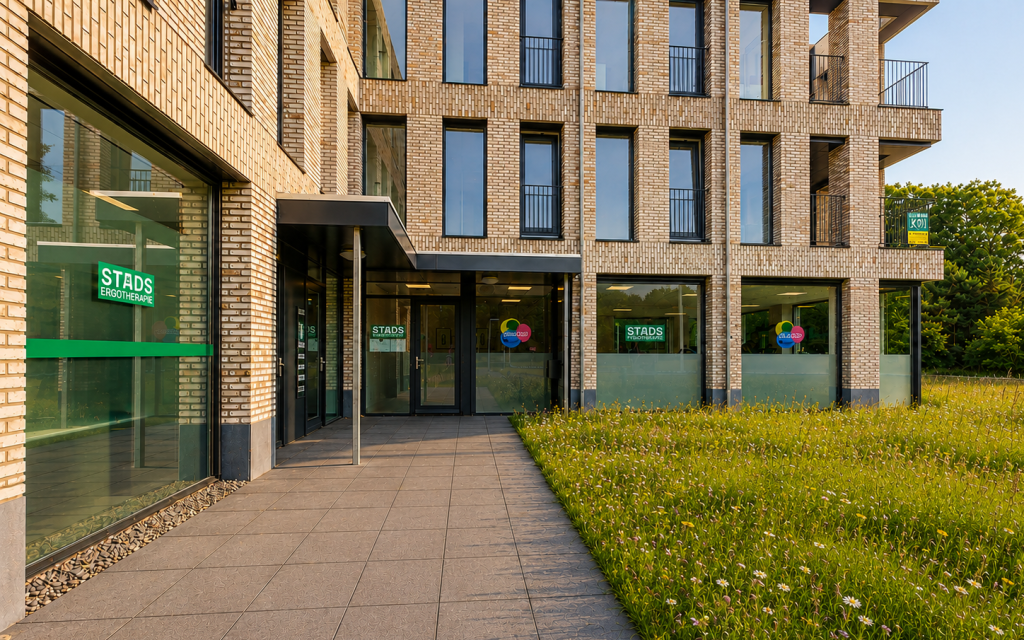
Right in the heart of the Reeshof, close to the A58 exit. Also easy to reach from the surrounding villages.
Address
Reeshofweg 40
5036 BK Tilburg
Mon to Fri, 08.00–18.00
Questions first?
Rather talk to someone first?
Not sure if we can help, or have a question about your treatment or reimbursement? Feel free to get in touch.
Call the practice
You’ll speak to one of us straight away. We’ll check the diary together there and then.
Leave your details
Fill in the contact form and we’ll get back to you as soon as possible.