

STADS Physiotherapy
Scoliosis
Working with the orthopaedic surgeon towards a strong, supple back.
or call 040 – 311 1151 / 013 – 303 0361
No referral neededSeen within 48 hoursContracts with all health insurers
You notice that one of your child’s shoulders is higher, a shoulder blade sticks out more or the waist looks different on each side. Perhaps the GP or orthopaedic surgeon has already diagnosed scoliosis and you’re wondering what your child can do themselves. On this page you’ll read what scoliosis is, how it’s monitored and treated, and what exercise therapy can do.
What is scoliosis?
With scoliosis, the spine has a sideways curve. Seen from behind, the back isn’t straight but follows an S or C shape. The vertebrae also rotate slightly around their axis. This can create a bulge on one side of the back, which is most visible when your child bends forward.
The most common form is idiopathic scoliosis. Idiopathic means there’s no clear cause. This form usually develops during the growth spurt, around puberty. A larger curve is seen more often in girls. Scoliosis can also be linked to a congenital abnormality of the vertebrae or to a neurological or muscle disease, but that’s less common.
The diagnosis is made by the GP and then usually by an orthopaedic surgeon, using an X-ray. On that X-ray, the size of the curve is measured in degrees. A tilt that disappears when your child sits down or bends forward, for example due to a difference in leg length or pain, isn’t true scoliosis.
What symptoms can your child have?
- One shoulder or shoulder blade is higher or sticks out more
- A difference in the waist, with one side more indented
- A bulge on one side of the back when bending forward
- The pelvis or hips are uneven
- Clothes hang unevenly, for example trousers or a skirt
- Sometimes a tired feeling or pain in the back, especially after standing or sitting for a long time
Many children with idiopathic scoliosis have little or no pain. That’s exactly why it’s sometimes only noticed late.
What causes scoliosis?
With idiopathic scoliosis, the exact cause isn’t known. We do know that heredity plays a part: if scoliosis runs in the family, the chance is greater. The curve develops and mainly increases during periods of rapid growth. The more growth still lies ahead, the greater the chance that a curve will increase. That’s why check-ups during puberty are important.
It’s good to know what doesn’t cause scoliosis. A heavy school bag, poor sitting posture, lots of screen time or a particular sport don’t lead to true scoliosis. So as a parent you haven’t done anything wrong, and neither has your child.
There are also other forms. In congenital scoliosis, one or more vertebrae have formed differently. In neuromuscular scoliosis, the curve is caused by a condition of the nerves or muscles, such as cerebral palsy or a muscle disease. Functional scoliosis is a tilt without a fixed curvature, for example due to a difference in leg length. Each of these forms needs a different approach, which is why a proper medical diagnosis is the first step.
How long does it last?
Scoliosis doesn’t go away by itself, but by no means every curve gets bigger. Many children have a small curve that stays stable and only needs monitoring. The risk of it increasing is mainly there while your child is still growing. Once growth has finished, smaller curves usually stay stable. Larger curves are still monitored by the doctor in adulthood.
The orthopaedic surgeon decides what’s needed based on the size of the curve and the remaining growth. That can range from regular check-ups to a brace or, with a large curve, an operation. How it will go for your child can’t be said for certain in advance. That’s why the check-ups are so important.
When should you see a paediatric physiotherapist?
- Your child has scoliosis and, alongside the check-ups with the orthopaedic surgeon, you want to get started actively with exercises
- Your child has back pain or a tired feeling in the back because of the scoliosis
- Your child wears a brace and needs help to stay fit and strong
- Your child feels unsure about moving or playing sport with scoliosis
- Your child needs to recover after back surgery
- You’re unsure about your child’s posture and want to have it checked whether further examination is needed
Can’t work it out on your own?
Our physiotherapists and occupational therapists are happy to help. In most cases you can come without a referral, in Eindhoven or Tilburg.
When should you see your GP?
See your GP if you notice an uneven back, a higher shoulder or a bulge when your child bends forward, and there’s no diagnosis yet. Also contact the GP or treating specialist if:
- The curve is visibly increasing quickly
- Your child has a lot of back pain, or pain at night
- Your child has tingling, loss of strength or problems with weeing or pooing
- Scoliosis is found in a young child, well before puberty
How STADS helps with scoliosis
At STADS, exercise therapy for scoliosis is always an addition to the check-ups and treatment by the GP and orthopaedic surgeon. We start with a conversation with you and your child. With teenagers, we make a point of involving the young person themselves, because it’s about their body and their motivation. We ask about the diagnosis, the arrangements with the orthopaedic surgeon, any symptoms and what your child would like to be able to do.
Then we examine posture, the mobility of the spine, core strength and fitness. We explain what scoliosis is and what exercise can and can’t do. To be honest: exercise therapy doesn’t straighten a curve. But it can help make the back stronger and more supple, reduce symptoms and make your child more aware of their own posture.
Together we set goals, such as less back pain, taking part in sport more easily or staying fit while wearing a brace. The treatment consists of exercises for the trunk, breathing and body awareness, tailored to your child’s curve, plus general strength and fitness training. We build this up gradually and give you an exercise programme to do at home.
Our paediatric physiotherapists coordinate the treatment with the orthopaedic surgeon where needed. After back surgery, too, we guide your child in building up movement and sport again, following the hospital’s advice.
What can you do yourself?
- Go to every check-up with the orthopaedic surgeon, even if your child has no symptoms
- Let your child keep moving and playing sport; with most forms of scoliosis, that’s fine
- If your child wears a brace, help them wear it as the orthopaedic surgeon advises
- Regularly do the exercises your child gets from the paediatric physiotherapist at home
- Talk to your child about how they feel; scoliosis and a brace can also be emotionally hard
Good to know
Frequently asked questions
Do I need a referral?
In most cases, no. You can come to our paediatric physiotherapists with your child without a referral. We start with a short screening to check whether paediatric physiotherapy suits the symptoms. Sometimes we ask for information from the GP, youth doctor or specialist, so we can work well together. With scoliosis, it’s important that the diagnosis and check-ups go through the GP and orthopaedic surgeon.
Is it covered by my insurance?
For children under 18, paediatric physiotherapy is often (partly) covered by the basic insurance. Exactly how many treatments are covered depends on the condition, your health insurance and sometimes your supplementary package. For some chronic conditions, a different arrangement applies under the basic insurance. For more information, see reimbursements and rates or check your policy.
Can exercise therapy straighten scoliosis?
No, we can be honest about that. Exercise therapy doesn’t straighten a fixed curve. But it can help make the back stronger and more supple, reduce symptoms and make your child more aware of their posture. Whether exercise can limit the progression of a curve is still being researched. That’s why it’s always an addition to the check-ups and treatment by the orthopaedic surgeon.
Can my child play sport with scoliosis?
In most cases, yes, and it’s actually recommended. Exercise keeps the back strong and is good for fitness and self-confidence. After an operation or with a brace, temporary adjustments sometimes apply. Always follow the orthopaedic surgeon’s advice. The paediatric physiotherapist can help build sport back up safely.
Is scoliosis caused by poor posture?
No. Poor posture, a heavy school bag or lots of sitting don’t cause true scoliosis. In the most common form, the cause is unknown and heredity plays a part. A crooked posture that your child can correct themselves is something different from scoliosis. If in doubt, have the GP take a look.
Our locations
Two practices, one team
In Eindhoven and Tilburg, physiotherapists and occupational therapists work together under one roof. Choose the practice that’s easiest for you.
Eindhoven

Centrally located on Geldropseweg, with spacious treatment rooms and a large exercise room. Easy to reach by bike, public transport and car.
Address
Geldropseweg 28
5611 SJ Eindhoven
Free parking behind the building
Tilburg
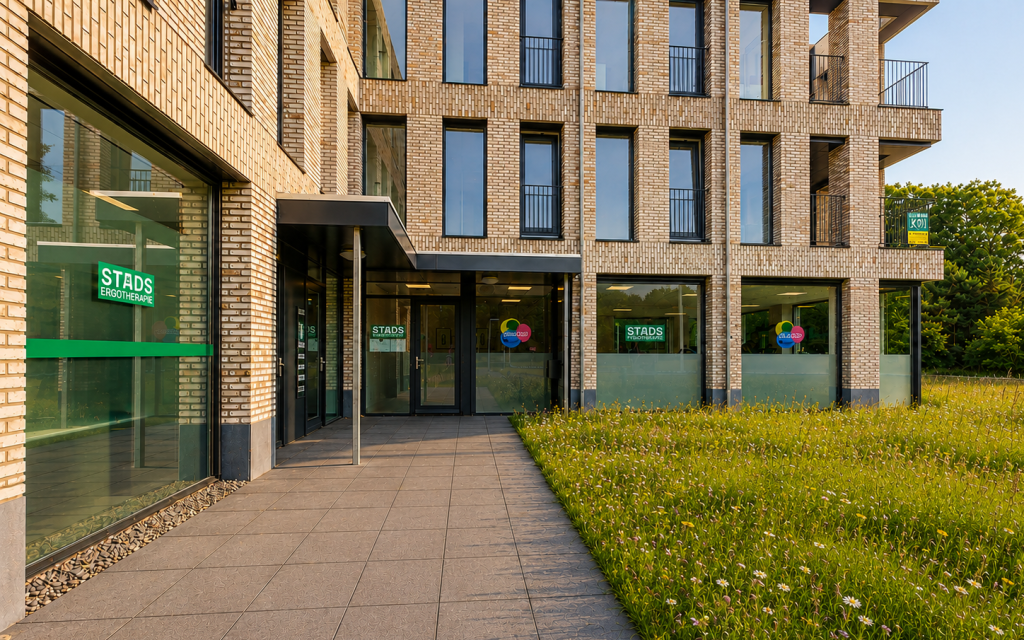
Right in the heart of the Reeshof, close to the A58 exit. Also easy to reach from the surrounding villages.
Address
Reeshofweg 40
5036 BK Tilburg
Mon to Fri, 08.00–18.00
Questions first?
Rather talk to someone first?
Not sure if we can help, or have a question about your treatment or reimbursement? Feel free to get in touch.
Call the practice
You’ll speak to one of us straight away. We’ll check the diary together there and then.
Leave your details
Fill in the contact form and we’ll get back to you as soon as possible.