
STADS Physiotherapy
Sever’s disease
Heel pain during growth: smart pacing so your child can keep playing sport.
or call 040 – 311 1151 / 013 – 303 0361
No referral neededSeen within 48 hoursContracts with all health insurers
Your child has pain in their heel, especially during or after sport. Perhaps they walk on their toes or limp a little in the morning or after a match. In active, growing children, this is often Sever’s disease. On this page you’ll read what it is, how long it usually lasts and how your child can keep moving.
What is Sever’s disease?
Sever’s disease is a growth-related heel condition. The word disease sounds serious, but it is an overload of the growth plate in the heel bone. You may also hear it called morbus Sever or calcaneal apophysitis.
The Achilles tendon, the strong tendon of the calf muscles, is attached to the back of the heel bone. In growing children, there is still a growth plate close to that attachment: a zone of soft, growing bone. With every step, jump or sprint, the Achilles tendon pulls on the heel bone. The underside of the heel also takes a lot when landing. If that load becomes too great, the growth plate becomes irritated and pain develops.
Sever’s disease is common in active children aged roughly 8 to 14, often around the start of the growth spurt. The pain is usually in both heels, although one side may hurt more. It isn’t dangerous and it goes away by itself once the heel has finished growing.
What symptoms can your child have?
- Pain at the back or underside of the heel
- More pain when running, jumping or playing sport on hard surfaces
- Pain when you gently squeeze the heel from both sides
- Limping or walking on tiptoe after sport
- Stiffness and pain with the first steps after rest or in the morning
- Tight calf muscles
What causes Sever’s disease?
Here too, it’s about the balance between load and load capacity. Load is what the heel has to deal with in a day: walking, running, jumping, PE lessons and sport. Load capacity is what the growth plate can handle at that moment.
During a growth spurt, the bone grows quickly, while the calf muscles and Achilles tendon still have to catch up. This makes them tighter, so they pull harder on the heel. At the same time, the growth plate is vulnerable. If your child runs and jumps a lot during that period, the limit is reached quickly. That’s why sports such as football, hockey, basketball, athletics, gymnastics and dance cause symptoms more often.
Other factors that can play a part are:
- A sudden increase in training, for example at the start of a season
- Playing sport on hard surfaces, such as artificial grass or a sports hall
- Shoes with little cushioning or studded boots with a flat heel
- Tight calf muscles or limited ankle mobility
- Little recovery time between training sessions and matches
The pain is a signal that the load is temporarily too great. It doesn’t mean permanent damage is being done. That’s why complete rest is usually not needed.
How long does it last?
Sever’s disease goes away by itself when the growth plate in the heel closes. In many children, the symptoms ease within a few weeks to months if the load is paced well. In others, the symptoms come back in waves, for example with a new growth spurt or a new sports season, and it takes longer.
Lasting problems after growth has finished are rare. With clear agreements about sport, rest and exercises, most children can keep taking part, sometimes in an adapted form. Exactly how long it will last for your child can’t be predicted.
When should you see a paediatric physiotherapist?
- The heel pain is holding your child back in sport, PE or playing outside
- Your child limps or walks on tiptoe after sport
- The symptoms have lasted for weeks, even after taking it easier for a few days
- The pain keeps coming back, for example with every new season
- You want to know how much sport your child can keep doing without it getting worse
Can’t work it out on your own?
Our physiotherapists and occupational therapists are happy to help. In most cases you can come without a referral, in Eindhoven or Tilburg.
When should you see your GP?
See your GP if your child:
- Has severe pain after a fall or awkward landing and can’t stand on the foot
- Has a red, warm or clearly swollen heel, or has a fever and feels ill
- Wakes up at night from the pain, or is still in a lot of pain at rest
- Has pain in one heel that keeps getting worse despite doing less sport
- Is younger than about 7 and has heel pain
How STADS helps with Sever’s disease
At STADS, we start with your story and your child’s. Which sports do they play, on what surface, in which shoes and how often? When is the pain there and what helps? Then we examine the heels, the ankles, the calf muscles and how your child walks, runs and jumps. That way we can assess the problem properly and rule out other causes as far as possible.
We explain what is happening in the heel and why the pain is not a sign of damage. Together with your child, we agree how much pain is acceptable. A rule of thumb: mild pain during sport is fine, as long as it’s gone again the next day.
Next, we adjust the load together. That usually doesn’t mean stopping sport, but temporarily jumping or sprinting less, training on soft surfaces more often or skipping a session. We give exercises for the strength and flexibility of the calf muscles and for the foot and leg muscles. We also look at footwear. Sometimes a heel cushion or a shoe with more cushioning can temporarily relieve the symptoms. Step by step, we build the load back up.
Our paediatric physiotherapists work with parents and coaches so your child can keep taking part as much as possible. For young people who play sport intensively, sports physiotherapy can help with building up to full match load.
What can you do yourself?
- Let your child keep moving and adjust sport to the pain
- Have your child wear well-cushioned, well-fitting shoes, also outside of sport
- Where possible, choose a softer surface, such as grass instead of a hard sports floor
- Cool the heel after sport with a cold pack wrapped in a cloth, if that feels good
- Don’t let your child run barefoot on hard floors while the heel is painful
- Discuss with the coach whether the number of jumps and sprints can be reduced for a while
Read also
Related complaints
Good to know
Frequently asked questions
Do I need a referral?
In most cases, no. You can come to our paediatric physiotherapists with your child without a referral. We start with a short screening to check whether paediatric physiotherapy suits the complaints. Sometimes we ask for information from the GP, youth health doctor (jeugdarts) or specialist, so that we work well together.
Is it covered by my insurance?
For children under 18, paediatric physiotherapy is often (partly) covered by the basic insurance. Exactly how many treatments are covered depends on the complaint, your health insurance and sometimes your supplementary package. For some chronic conditions, a different arrangement applies under the basic insurance. For more information, see our page on reimbursements and rates or check your policy.
Does my child have to stop playing sport?
Usually not. Stopping completely is rarely necessary. It’s about the right dose. Mild pain during sport is fine, as long as it’s gone again the next day. If the pain is more severe, your child limps or the pain lingers the next day, we adjust the sport for a while. That way your child can often keep taking part.
Do heel cushions or different shoes help?
For some children, yes. A heel cushion or a shoe with good cushioning can temporarily reduce the load on the heel and relieve the pain. It doesn’t solve the cause, but it can help your child keep moving. Exercises for the calf muscles and pacing the load remain the most important.
Can Sever’s disease cause permanent damage?
No, that is very rare. The symptoms disappear once the growth plate in the heel has closed. The pain is annoying, but it’s a signal of overload and not a sign of permanent damage. With good pacing, most children can simply keep playing sport.
Our locations
Two practices, one team
In Eindhoven and Tilburg, physiotherapists and occupational therapists work together under one roof. Choose the practice that’s easiest for you.
Eindhoven

Centrally located on Geldropseweg, with spacious treatment rooms and a large exercise room. Easy to reach by bike, public transport and car.
Address
Geldropseweg 28
5611 SJ Eindhoven
Free parking behind the building
Tilburg
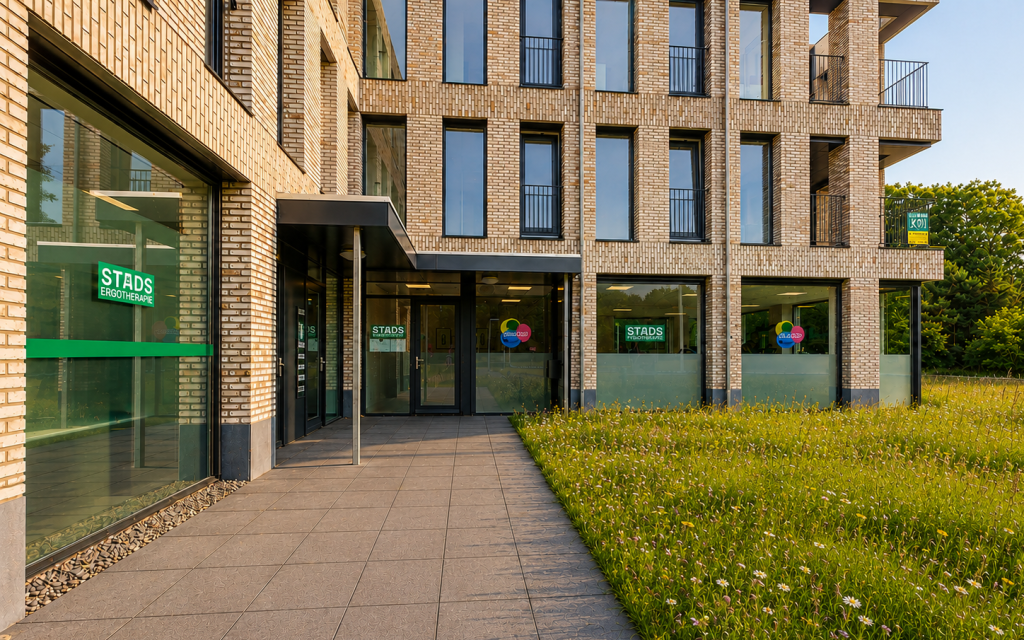
Right in the heart of the Reeshof, close to the A58 exit. Also easy to reach from the surrounding villages.
Address
Reeshofweg 40
5036 BK Tilburg
Mon to Fri, 08.00–18.00
Questions first?
Rather talk to someone first?
Not sure if we can help, or have a question about your treatment or reimbursement? Feel free to get in touch.
Call the practice
You’ll speak to one of us straight away. We’ll check the diary together there and then.
Leave your details
Fill in the contact form and we’ll get back to you as soon as possible.