

STADS Physiotherapy
Heel spur
A spur on an X-ray doesn’t have to mean the end of pain-free walking.
or call 040 – 311 1151 / 013 – 303 0361
No referral neededSeen within 48 hoursContracts with all health insurers
You have pain under your heel and perhaps you’ve been told you have a heel spur. That sounds like a sharp piece of bone digging into your foot, but that’s usually not how it works. On this page you’ll read what a heel spur is, where the pain probably comes from, what you can do yourself and how our physiotherapists help you.
What is a heel spur?
A heel spur is a small bony outgrowth on the underside of your heel bone. It sits where the plantar fascia attaches. That’s a strong band of connective tissue under your foot that runs from your heel to your toes and supports your arch. A few short foot muscles also attach there.
A heel spur develops slowly, as the bone’s response to long-term pulling on that attachment. You can only see it on an X-ray. You usually can’t feel it.
Important to know: a heel spur itself is often not the source of the pain. Many people have a heel spur without ever noticing it. And many people with heel pain have no spur at all. The pain usually comes from the overloaded fascia at that spot. This is called plantar fasciitis, or by the more modern term plantar fasciopathy. So heel spur and plantar fasciitis overlap a great deal, and the approach is largely the same.
What symptoms can you have?
- Pain under or on the inside of the heel
- A stabbing pain with your first steps in the morning or after sitting
- Pain that eases after walking a bit, but returns after standing for a long time or at the end of the day
- Tenderness under the heel
- More trouble on hard floors or barefoot
These symptoms are the same as with plantar fasciitis. Whether a spur shows up on an X-ray usually makes little difference to the symptoms and treatment.
What causes a heel spur?
A heel spur grows gradually when the bone has to cope with pulling from the fascia and foot muscles over a long time. The chance of a spur increases with age, and it’s more common in people who are overweight. It’s really an adaptation of the body, not damage.
The pain that people with a heel spur feel usually comes from overloading the fascia. Here too, it’s about the balance between load and load capacity. If the sole of your foot has to handle more than it can cope with at that moment, it becomes sensitive.
Factors that can play a part:
- A lot of standing or walking, especially on hard surfaces
- A rapid increase in walking, running or sport
- Being overweight
- A stiff calf or Achilles tendon
- Little strength in the calf and foot muscles
- Shoes with little cushioning or support
It’s often a combination of factors. So a heel spur on an X-ray is more a sign that the attachment has been under load for a long time than the direct cause of your pain.
How long does it last?
The spur itself doesn’t go away, but that isn’t necessary to become pain-free. For most people, the pain under the heel eventually goes away. It does take time, though: often months, and sometimes more than a year. The sooner you get the load right, the smaller the chance that the symptoms linger.
With good explanation, adjusted load and targeted exercises, many people notice improvement sooner. The course is usually up and down, with better and worse days. So focus mainly on the trend over a number of weeks. Surgery to remove the spur is rarely needed and is only considered in exceptional cases.
When should you see a physiotherapist?
- Your heel pain hasn’t eased after a few weeks of adjusting things yourself
- Your pain limits you at work, when walking or in sport
- You’re worried about a heel spur on an X-ray and want to know what to do about it
- You don’t know which exercises, shoes or insoles make sense
- You’ve had symptoms for a long time and feel stuck
Can’t work it out on your own?
Our physiotherapists and occupational therapists are happy to help. In most cases you can come without a referral, in Eindhoven or Tilburg.
When should you see your GP straight away?
Contact your GP if:
- Your heel is red, warm and swollen, especially with a fever
- You have tingling, numbness or a burning pain in your foot
- The pain started suddenly after a fall or jump and you can barely stand on your foot
- You also have pain and swelling in other joints
How STADS helps with a heel spur
At STADS, we start with your story. How long have you been in pain, how much do you stand and walk, and what have you already tried? Then we examine your foot, your ankle, your calf and how you walk. That way we can judge where your pain is coming from and rule out other causes of heel pain. A new X-ray is usually not needed for this.
We explain what a heel spur does and doesn’t mean. For many people it’s a relief to hear that there’s no sharp bone digging into their foot, and that the pain can usually be reduced with the right approach. Together we set goals, such as a working day without pain or a long walk again.
The treatment focuses on the overloaded fascia. You temporarily adjust your load and do exercises to make the sole of your foot, your calf and your foot muscles stronger and more supple. We give advice on shoes and discuss whether temporary support with tape or insoles makes sense. You get a clear exercise plan to take home, so you can keep working on your recovery between appointments.
If you don’t recover enough despite a good exercise programme, shockwave therapy can be a useful addition. For heel pain, shockwave is one of the better-researched additional treatments, but it works best in combination with exercise.
What can you do yourself?
- Wear sturdy shoes with good cushioning and avoid walking barefoot on hard floors for long periods.
- Stretch your calf and the sole of your foot a few times a day, especially before getting up.
- Temporarily cut back on what causes the most pain and choose alternatives such as cycling or swimming.
- Break up long periods of standing with sitting or walking where possible.
- A soft heel pad can be comfortable if you stand a lot.
- Then build up your activities again step by step.
Read also
Related complaints
Good to know
Frequently asked questions
Do I need a referral?
No. In most cases you can come for physiotherapy without a referral from your GP. At your first appointment, we start with a short screening. We check whether physiotherapy suits your complaint, or whether it would be wise to see your GP first. If you do have a referral, feel free to bring it along.
Is physiotherapy covered by my insurance?
That depends on your health insurance and your supplementary package. Many supplementary insurance policies cover a number of treatments per year. For some chronic conditions, a different arrangement applies under your basic insurance. Check your policy or read more on our page about reimbursements and rates.
Does the heel spur need to be removed?
Almost never. Because the spur itself is usually not the cause of your pain, removing it often doesn’t solve the problem. Most people become pain-free by adjusting their load and doing exercise therapy, even though the spur is still visible on the X-ray. Surgery is only considered in exceptional cases, and you discuss that with your GP or specialist.
What’s the difference between a heel spur and plantar fasciitis?
A heel spur is a bony outgrowth that you see on an X-ray. Plantar fasciitis is overloading of the plantar fascia, which is usually the real source of the pain. The two often occur together. For you as a patient, the distinction makes little difference: the approach is largely the same.
Do I need an X-ray?
Usually not. We make the diagnosis based on your story and the examination. An X-ray only shows whether there’s a spur, and that rarely changes the treatment. Only if there’s doubt about another cause, such as a stress fracture, can further tests via your GP be useful.
Our locations
Two practices, one team
In Eindhoven and Tilburg, physiotherapists and occupational therapists work together under one roof. Choose the practice that’s easiest for you.
Eindhoven

Centrally located on Geldropseweg, with spacious treatment rooms and a large exercise room. Easy to reach by bike, public transport and car.
Address
Geldropseweg 28
5611 SJ Eindhoven
Free parking behind the building
Tilburg
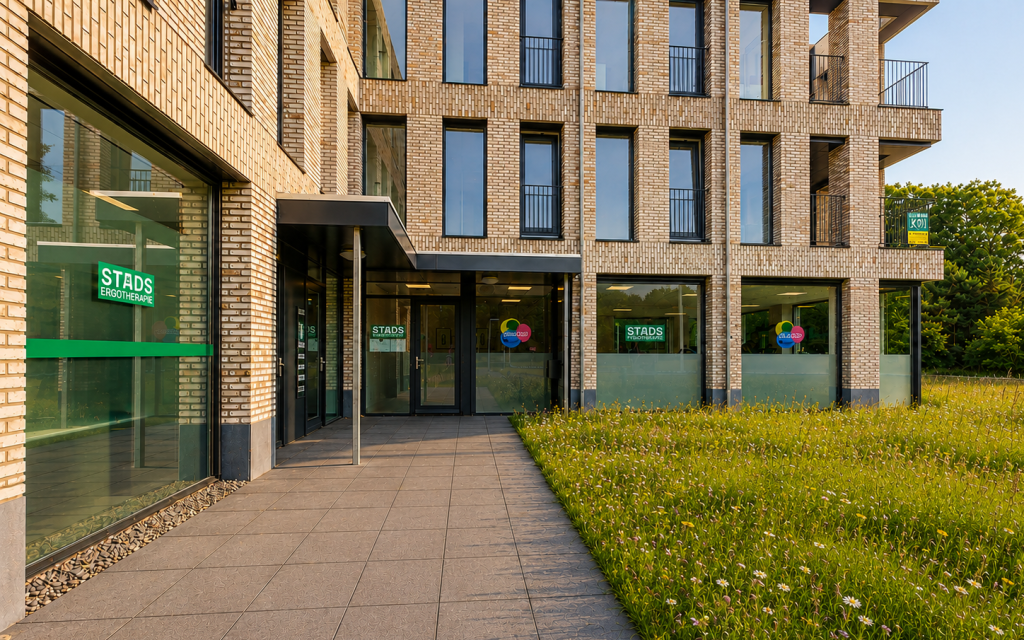
Right in the heart of the Reeshof, close to the A58 exit. Also easy to reach from the surrounding villages.
Address
Reeshofweg 40
5036 BK Tilburg
Mon to Fri, 08.00–18.00
Questions first?
Rather talk to someone first?
Not sure if we can help, or have a question about your treatment or reimbursement? Feel free to get in touch.
Call the practice
You’ll speak to one of us straight away. We’ll check the diary together there and then.
Leave your details
Fill in the contact form and we’ll get back to you as soon as possible.