

STADS Physiotherapy
Tennis elbow
You don’t have to play tennis to have trouble with your elbow.
or call 040 – 311 1151 / 013 – 303 0361
No referral neededSeen within 48 hoursContracts with all health insurers
You feel pain on the outside of your elbow when you lift a cup of coffee, open a bottle or shake someone’s hand. Using a mouse or working in the garden is getting harder. Chances are you have tennis elbow. On this page you’ll read what it is, how it develops, how long it can last and what you can do about it.
What is tennis elbow?
Tennis elbow is a tendon problem on the outside of your elbow. The medical name is lateral epicondylalgia, which literally means ‘pain at the outer bony bump’. The tendons of the muscles that straighten your wrist and fingers are attached to that bony bump, the lateral epicondyle. You use those muscles for almost everything you do with your hand: gripping, lifting, typing and twisting.
With tennis elbow, the tendon attachment has become overloaded. People used to think it was an inflammation, hence the old name epicondylitis. We now know there’s usually no real inflammation. Instead, the tendon tissue has become weaker and more sensitive, because recovery couldn’t keep up with the load.
The name is misleading: most people with tennis elbow don’t play tennis at all. It mainly occurs between the ages of about 35 and 55, and usually in your dominant arm.
What symptoms can you have?
- Pain on the outside of your elbow, sometimes spreading to your forearm
- Pain when gripping, squeezing or lifting, especially with your arm straight
- Pain when opening jars or wringing out a cloth
- A tender spot on the bony bump on the outside of your elbow
- Less grip strength, so you drop things more easily
- Stiffness in the elbow, especially in the morning
What causes tennis elbow?
Tennis elbow is caused by an imbalance between the load on the tendon and its load capacity. Tendons can take a lot, but they adapt slowly. If you ask much more of your forearm muscles than you’re used to, or keep repeating the same movement without enough recovery, the tendon can become overloaded.
Known risk factors are:
- Repeated gripping and twisting movements, for example when using a screwdriver, painting or gardening
- Long periods of mouse work and typing without breaks
- Heavy lifting with your arm straight and your palm facing down
- Racket sports with the wrong technique or equipment
- A sudden increase in work or DIY jobs, such as a house move or renovation
- Smoking and being aged between 35 and 55
The symptoms often come on gradually, so you don’t know exactly when it started. Sometimes there’s a clear trigger, such as a weekend of heavy DIY.
How long does tennis elbow last?
Tennis elbow takes patience. For many people the symptoms ease within a few months, but it can take longer. For most people the symptoms have largely gone within a year. For a smaller group they last longer or come back.
Tendon tissue heals slowly, because it has a relatively poor blood supply. Recovery therefore often happens in small steps, with better and worse weeks. How quickly it goes depends on things like how long you’ve had symptoms, how demanding your work or hobby is and how well you can adjust the load. A good build-up often makes the difference.
Resting completely for a long time usually doesn’t help: the tendon doesn’t get stronger, so the symptoms come back as soon as you start again. Constantly working through the pain isn’t wise either. The trick is to load the tendon just enough to make it stronger, while giving it enough time to recover.
When should you see a physiotherapist?
- Your symptoms haven’t eased after a few weeks of adjusting
- You’re struggling with your work, sport or daily tasks
- Your symptoms keep coming back
- You want to know which exercises will make your tendon stronger
- You’re unsure how to adjust your work or sport without stopping completely
Can’t work it out on your own?
Our physiotherapists and occupational therapists are happy to help. In most cases you can come without a referral, in Eindhoven or Tilburg.
When should you see your GP straight away?
- After a fall or accident with swelling, a misshapen elbow, or if you can no longer bend or straighten your arm
- If your elbow is red, warm and swollen, especially with a fever
- If you have tingling, numbness or loss of strength in your hand or fingers
How STADS helps with tennis elbow
At STADS, we start with a conversation about your symptoms, your work, your hobbies and your sport. Which movements hurt and what do you want to be able to do again? Then we examine your elbow, wrist, shoulder and neck. That way we check whether it really is tennis elbow, or whether the pain is coming from your neck, for example.
We explain what’s going on with your tendon and why rest alone is usually not enough. Together we set goals, such as using a mouse for a full working day again, carrying a bag without pain or getting back to tennis or padel.
The core of the treatment is exercise therapy. With targeted strength exercises, you make the tendon and forearm muscles stronger step by step. We start gently and build up the load gradually. A little pain during the exercises is usually not a problem. We also look at your daily load: how you lift, your workstation and, if relevant, your sports technique and equipment. Small changes, such as a different mouse, a thicker handle or a different grip, can already take a lot of strain off the tendon. You get a clear exercise plan to do at home, so you actively contribute to your own recovery. We regularly review your progress together and adjust the programme if needed.
For long-term symptoms, shockwave therapy can be added to the exercises. If you play a lot of sport, our sports physiotherapy helps you return to it safely. If your symptoms are caused by your work, our occupational therapists can help you with work and return to work.
What can you do yourself?
- Temporarily cut back on the movements that hurt a lot, but keep using your arm
- Lift with your palm facing up as much as possible and keep objects close to your body
- Take regular short breaks when using a mouse, typing or doing DIY
- Spread heavy jobs over several days
- For some people, an elbow strap can reduce pain during activities
- Gradually build your sport and work back up as the pain eases
Read also
Related complaints
Good to know
Frequently asked questions
Do I need a referral?
No. In most cases you can come to us for physiotherapy and occupational therapy without a referral from your GP. At your first appointment, we start with a short screening. We check whether your complaints are suitable for treatment by us, or whether it would be wise to see your GP first. If you do have a referral, feel free to bring it along.
Is the treatment covered by my insurance?
That depends on your health insurance and whether you have a supplementary package. Physiotherapy is usually covered by your supplementary insurance, up to a certain number of treatments per year. For some chronic conditions, a different arrangement applies under your basic insurance. For more information, see our page on reimbursements and rates or check your policy.
Does an injection help with tennis elbow?
An injection with an anti-inflammatory (corticosteroid) can reduce the pain in the short term. However, research shows that the symptoms come back more often afterwards and that long-term recovery can actually be slower. That’s why GPs are cautious about it nowadays. Exercise therapy and adjusting the load are the basis of the treatment.
Do I have to stop sport or work?
Usually not completely. Complete rest doesn’t make the tendon stronger. It’s better to adjust the load for a while: shorter, lighter or with more breaks. Pain that stays mild during sport or work and isn’t worse the next day is usually acceptable. Your physiotherapist will help you decide what’s safe for you.
What’s the difference between tennis elbow and golfer’s elbow?
With tennis elbow, the pain is on the outside of your elbow, at the tendons of the muscles that straighten your wrist and fingers. With golfer’s elbow, the pain is on the inside, at the tendons of the muscles that bend them. The cause and approach are similar: overload of the tendon, and treatment with exercise therapy and a good build-up of the load.
Our locations
Two practices, one team
In Eindhoven and Tilburg, physiotherapists and occupational therapists work together under one roof. Choose the practice that’s easiest for you.
Eindhoven

Centrally located on Geldropseweg, with spacious treatment rooms and a large exercise room. Easy to reach by bike, public transport and car.
Address
Geldropseweg 28
5611 SJ Eindhoven
Free parking behind the building
Tilburg
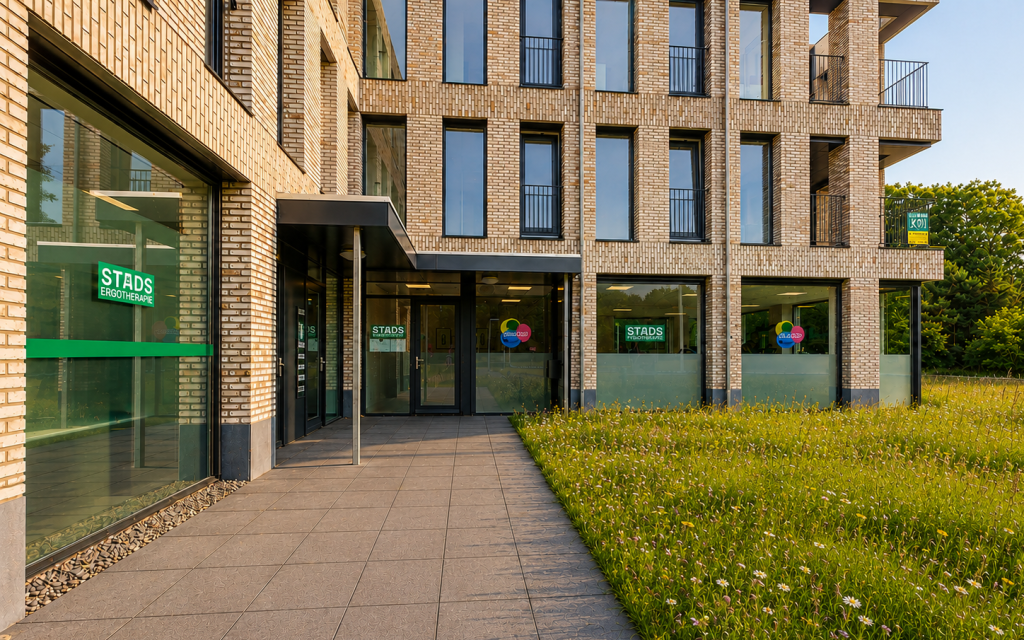
Right in the heart of the Reeshof, close to the A58 exit. Also easy to reach from the surrounding villages.
Address
Reeshofweg 40
5036 BK Tilburg
Mon to Fri, 08.00–18.00
Questions first?
Rather talk to someone first?
Not sure if we can help, or have a question about your treatment or reimbursement? Feel free to get in touch.
Call the practice
You’ll speak to one of us straight away. We’ll check the diary together there and then.
Leave your details
Fill in the contact form and we’ll get back to you as soon as possible.