

STADS Physiotherapy
Patellofemoral pain syndrome
Pain at the front of your knee is annoying, but with the right build-up you can often get moving properly again.
or call 040 – 311 1151 / 013 – 303 0361
No referral neededSeen within 48 hoursContracts with all health insurers
You feel a nagging pain around or behind your kneecap. Especially on the stairs, when squatting or jumping, or when you sit with bent knees for a long time, such as in the cinema or the car. This is often called patellofemoral pain syndrome. On this page you’ll read what it is, how it develops, what you can do yourself and how our physiotherapists can help you.
What is patellofemoral pain syndrome?
Patellofemoral pain syndrome, PFPS for short, is pain at the front of the knee, around or behind the kneecap. The name comes from the kneecap (patella) and the thighbone (femur). The kneecap sits in the tendon of your large thigh muscle and slides through a small groove at the front of your thighbone when you bend and straighten your knee. This puts pressure on the joint between the kneecap and thighbone, especially when your knee is deeply bent and under load.
With PFPS, this area has become more sensitive to load. Usually no damage can be seen on an X-ray or scan. So it isn’t wear and tear, and it’s not a sign that your knee is breaking down. It is, however, one of the most common causes of knee pain in teenagers, young adults and people who play sport, and it’s more common in girls and women. Sometimes it affects both knees at the same time.
What symptoms can you have?
- A nagging pain around or behind the kneecap
- Pain on the stairs, especially going down
- Pain when squatting, kneeling, jumping or running, especially downhill
- Pain after sitting with bent knees for a long time, which eases when you straighten your leg
- Sometimes a cracking or grinding feeling, usually harmless
- Now and then the feeling that your knee gives way because of pain
What causes patellofemoral pain syndrome?
PFPS usually develops gradually, without a clear accident. The main factor is an imbalance between load and load capacity. The front of your knee has more to deal with than it can handle at that moment.
This can happen if you start doing more in a short time, for example:
- Training more or harder, or starting a new sport
- Lots of jumping, squatting, climbing stairs or walking downhill
- A growth spurt in teenagers, where the load stays the same but the body changes
Factors that lower your load capacity also play a part. Think of reduced strength in your thigh and hip muscles, a period of little exercise or recovering from an injury. Sometimes the way you move plays a role, for example if your knee collapses inwards a lot when you land or squat. Sleep, stress and how you think about your pain can also affect how sensitive your knee is.
Usually it’s a combination of these factors. That’s why we always look at the whole picture, not just the knee itself.
How long does it last?
To be honest, PFPS can be stubborn. With the right approach, many people notice improvement within a few weeks to a few months. For some people, the symptoms last longer or come back now and then, for example when the load increases sharply again.
Recovery usually has ups and downs. A day with more pain after lots of stair climbing or a hard training session doesn’t mean you’re going backwards. What matters is the trend over weeks. If you keep exercising actively and build up the load sensibly, you have the best chance of lasting recovery. Stopping all movement usually doesn’t help, because it makes your knee less able to handle load.
When should you see a physiotherapist?
- Your knee pain hasn’t eased after two to three weeks of adjusting your activities
- Your pain gets in the way of sport, school, work or climbing stairs
- You don’t know how much you can still do without making it worse
- Your symptoms keep coming back
- You’re a teenager (or the parent of a teenager) and the pain is getting in the way of sport or play
Can’t work it out on your own?
Our physiotherapists and occupational therapists are happy to help. In most cases you can come without a referral, in Eindhoven or Tilburg.
When should you see your GP straight away?
Contact your GP if:
- Your knee is very swollen, red or warm, especially together with a fever
- Your knee locks or you can no longer fully straighten it
- The pain started after a fall or twisting injury and your knee feels unstable
- Your child has knee pain together with a limp or hip pain; in children, hip problems can be felt as knee pain
How STADS helps with patellofemoral pain syndrome
At STADS, we start by listening. When did the pain start, what sport and exercise do you do, and what do you want to be able to do again? Then we examine your knee, hip and ankle, and look at how you move when you squat, climb stairs or land, for example. That way we can make a diagnosis and rule out other causes of knee pain.
We explain what’s going on. Many people are relieved to hear that there’s no damage, and that the pain here is mainly a signal that the knee is sensitive to load. Together we agree on your goals and how much you can keep doing in the meantime.
The core of the treatment is exercise therapy, focused on the strength of your hip and thigh muscles. That’s the best-researched approach for PFPS. We build up the exercises and your daily load step by step and work towards the activities that matter to you, such as running or jumping. Tape or a brace can sometimes help reduce the pain in the short term, but it’s always an addition to exercise.
If you play sport, our sports physiotherapy will guide your return to your sport. For children and young teenagers, a paediatric physiotherapist may be a good fit.
What can you do yourself?
- Keep moving, but temporarily cut back on what hurts most, such as deep squats, jumping or walking downhill.
- Pain up to about 3 on a scale of 10 during exercise is usually acceptable, as long as it isn’t worse the next day.
- Straighten your leg regularly if you have to sit for a long time, or get up for a moment.
- Train your hip and thigh muscles, for example by standing up from a chair or stepping sideways with a resistance band.
- Cycling with a slightly higher saddle is often fine.
- Build your sport back up gradually, without big jumps in volume or intensity.
Read also
Related complaints
Good to know
Frequently asked questions
Do I need a referral?
No. In most cases you can come to us for physiotherapy without a referral from your GP. At your first appointment, we start with a short screening. We check whether physiotherapy suits your complaint, or whether it would be wise to see your GP first. If you do have a referral, feel free to bring it along.
Is physiotherapy covered by my insurance?
That depends on your health insurance and your supplementary package. Many supplementary insurance policies cover a number of treatments per year. For some chronic conditions, a different arrangement applies under your basic insurance. Check your policy or read more on our page about reimbursements and rates.
Is patellofemoral pain syndrome the same as osteoarthritis?
No. With PFPS, there’s usually no visible damage to the cartilage. It’s a knee that has become sensitive to load, often in young and active people. Some research suggests that long-lasting symptoms are more often linked to osteoarthritis behind the kneecap later in life, but that link isn’t clear yet. Good exercise is the foundation in both cases.
Do I need to stop playing sport?
Usually not completely. You can often keep playing sport in an adapted form. Together we look at which parts your knee can handle now and what you’re better off avoiding or reducing for a while. That way you stay fit and keep your muscles strong, while your knee gets the chance to become less sensitive.
Does a knee brace or tape help?
For some people, tape or a brace can reduce the pain in the short term, making exercise and movement easier. In the long term, they don’t solve the problem. So see them as an aid alongside exercise therapy, not a replacement. We’ll discuss together whether it makes sense for you.
Our locations
Two practices, one team
In Eindhoven and Tilburg, physiotherapists and occupational therapists work together under one roof. Choose the practice that’s easiest for you.
Eindhoven

Centrally located on Geldropseweg, with spacious treatment rooms and a large exercise room. Easy to reach by bike, public transport and car.
Address
Geldropseweg 28
5611 SJ Eindhoven
Free parking behind the building
Tilburg
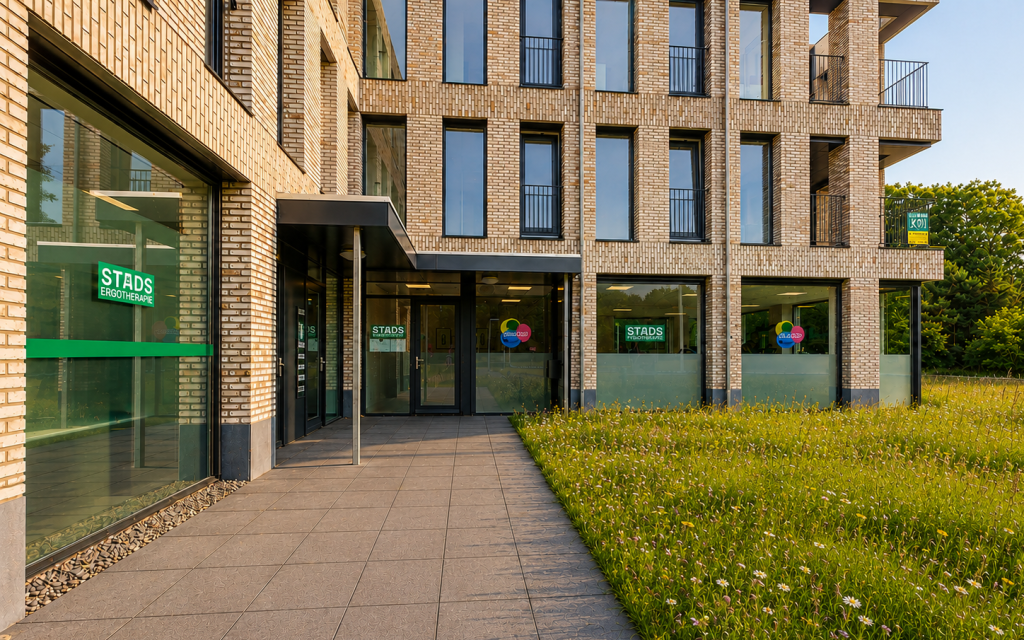
Right in the heart of the Reeshof, close to the A58 exit. Also easy to reach from the surrounding villages.
Address
Reeshofweg 40
5036 BK Tilburg
Mon to Fri, 08.00–18.00
Questions first?
Rather talk to someone first?
Not sure if we can help, or have a question about your treatment or reimbursement? Feel free to get in touch.
Call the practice
You’ll speak to one of us straight away. We’ll check the diary together there and then.
Leave your details
Fill in the contact form and we’ll get back to you as soon as possible.