

STADS Physiotherapy
Sinding-Larsen-Johansson syndrome
A growing knee needs smart pacing, not sitting still.
or call 040 – 311 1151 / 013 – 303 0361
No referral neededSeen within 48 hoursContracts with all health insurers
Your child has pain at the bottom of the kneecap, especially when jumping, running or climbing stairs. Perhaps they’re a sporty child who is growing fast. Then it may be Sinding-Larsen-Johansson syndrome. On this page you’ll read what it is, how long it usually lasts and how your child can keep moving.
What is Sinding-Larsen-Johansson syndrome?
Sinding-Larsen-Johansson syndrome is a growth-related knee complaint, named after the doctors who described it. It resembles Osgood-Schlatter disease, but sits in a different place. With Osgood-Schlatter, the pain is below the knee, on the shinbone. With Sinding-Larsen-Johansson, the pain is at the tip at the bottom of the kneecap.
The patellar tendon connects the kneecap to the shinbone. At the top, the tendon is attached to the lower tip of the kneecap. In growing children, that attachment point hasn’t fully matured yet, which makes it more sensitive. With lots of running and jumping, the tendon keeps pulling on that spot. The bone and the attachment become irritated, which causes pain.
It mainly affects active children between about 10 and 14 years old. It’s an overload complaint that comes with growing. It’s annoying, but not dangerous, and it goes away once the bone has finished growing.
What symptoms can your child have?
- Pain at the lower tip of the kneecap
- Tenderness when you press on that spot
- More pain when jumping, sprinting, climbing stairs or squatting deeply
- Pain during or after sport that eases again with rest
- Sometimes slight swelling at the bottom of the kneecap
- Stiff or tight thigh muscles
What causes Sinding-Larsen-Johansson syndrome?
As with other growth-related complaints, it’s about the balance between load and load capacity. The load is what the knee has to deal with: sport, PE lessons, playing outside. The load capacity is what the attachment of the patellar tendon can handle at that moment.
During a growth spurt, the bones grow quickly. Muscles and tendons have to adapt to the new length, so they’re temporarily tighter and pull harder. At the same time, the attachment to the kneecap is still vulnerable. If your child jumps and sprints a lot during that period, the limit is quickly exceeded. That’s why sports such as basketball, volleyball, football, gymnastics, dance and athletics cause complaints more often.
Other factors that can play a part are a sudden increase in training, several sports at once, little recovery time, hard surfaces and less strength or flexibility in the leg and hip muscles. A landing technique where the knee has to absorb a lot can also increase the load.
Here, pain is a signal that the load is too much for now. It doesn’t mean the knee is being permanently damaged. That’s why complete rest is usually not needed, but smart pacing is.
How long does it last?
Sinding-Larsen-Johansson syndrome clears up by itself once the kneecap has finished growing. In many children, the symptoms clearly ease within a few months to a year, but this varies from child to child. The pain can come in waves, for example during a growth spurt or a new sports season.
With a good balance between sport and recovery, most children can keep taking part, sometimes in an adapted form. Lasting complaints after growth has finished are rare. It does help to learn early on how to pace the load, so the symptoms don’t last longer than necessary.
When should you see a paediatric physiotherapist?
- The pain holds your child back in sport, PE or playing outside
- The symptoms have lasted for weeks, even after taking it easier for a few days
- You don’t know how much sport your child can keep doing
- The pain keeps coming back, for example with every new season
- Your child walks differently or limps because of the pain
Can’t work it out on your own?
Our physiotherapists and occupational therapists are happy to help. In most cases you can come without a referral, in Eindhoven or Tilburg.
When should you see your GP?
See your GP if your child:
- Suddenly has severe pain after a fall or jump and can no longer straighten or put weight on the knee
- Has a swollen, warm knee, or a fever and feels ill
- Is woken at night by the pain or still has a lot of pain at rest
- Has pain in the hip, groin or thigh, or limps for no clear reason
Knee pain in children can sometimes come from the hip. If in doubt, it’s important that the hip is examined too.
How STADS helps with Sinding-Larsen-Johansson syndrome
At STADS, we first take time to hear your story and your child’s. Which sports do they do, how often and how intensively? When is the pain there and what helps? With teenagers, we mainly talk to the young person themselves, because they know best what they feel and what they want. Then we examine the knee, the hip and the leg muscles, and look at movements such as squatting, jumping and landing.
We explain what’s happening in the knee and why the pain isn’t a sign of damage. Together we agree on how much pain is acceptable. A handy rule of thumb: mild pain during sport is fine, as long as it’s gone again the next day.
The treatment consists of pacing the load and doing exercises. Sometimes that means temporarily fewer jumps or sprints, or shorter training sessions, instead of stopping altogether. We work on the strength of the thigh, hip and calf muscles, on the flexibility of the leg muscles and on a landing technique that puts less strain on the knee. Step by step, we build back up towards full sport.
Our paediatric physiotherapists are happy to work with coaches, so your child can keep taking part as much as possible. For young people who play sport at a higher level, sports physiotherapy can help with the return to competition.
What can you do yourself?
- Let your child keep moving and adjust sport to the pain
- Accept mild pain during sport, as long as it’s gone again the next day
- Temporarily limit jumping and sprinting, or cut down the number of training sessions
- Cool the knee after sport with a cold pack wrapped in a cloth, if that feels good
- Make sure there are enough recovery days between hard training sessions and matches
- Discuss the symptoms with the coach, so the load can be adjusted
Read also
Related complaints
Good to know
Frequently asked questions
Do I need a referral?
In most cases, no. You can bring your child to our paediatric physiotherapists without a referral. We then start with a short screening to check whether paediatric physiotherapy suits the complaints. Sometimes we ask for information from the GP, youth health doctor or specialist, so we’re all on the same page.
Is it covered by insurance?
For children under 18, paediatric physiotherapy is often (partly) covered by the basic insurance. Exactly how many treatments are covered depends on the complaint, your health insurance and sometimes your supplementary package. For some chronic conditions, a different arrangement applies under the basic insurance. For more information, see our page on reimbursements and rates or check your policy.
What’s the difference with Osgood-Schlatter?
Both are growth-related knee complaints caused by the pull of the patellar tendon. The difference is the location. With Osgood-Schlatter, the pain is below the knee, on the shinbone, often with a lump. With Sinding-Larsen-Johansson, the pain is at the lower tip of the kneecap. The approach is largely the same: smart pacing and targeted exercise.
Does my child have to stop playing sport?
Usually not. Stopping completely is rarely needed. The aim is to pace the load so the pain stays limited. Mild pain during sport is fine, as long as it’s gone again the next day. If the pain is more severe or persists, we temporarily adjust the sport, for example with less jumping or shorter training sessions.
Is an X-ray needed?
Usually not. The diagnosis can often be made based on the history and a physical examination. An X-ray or ultrasound may be needed if the picture isn’t clear, if the symptoms started after a fall or if there are warning signs. Your GP will assess that.
Our locations
Two practices, one team
In Eindhoven and Tilburg, physiotherapists and occupational therapists work together under one roof. Choose the practice that’s easiest for you.
Eindhoven

Centrally located on Geldropseweg, with spacious treatment rooms and a large exercise room. Easy to reach by bike, public transport and car.
Address
Geldropseweg 28
5611 SJ Eindhoven
Free parking behind the building
Tilburg
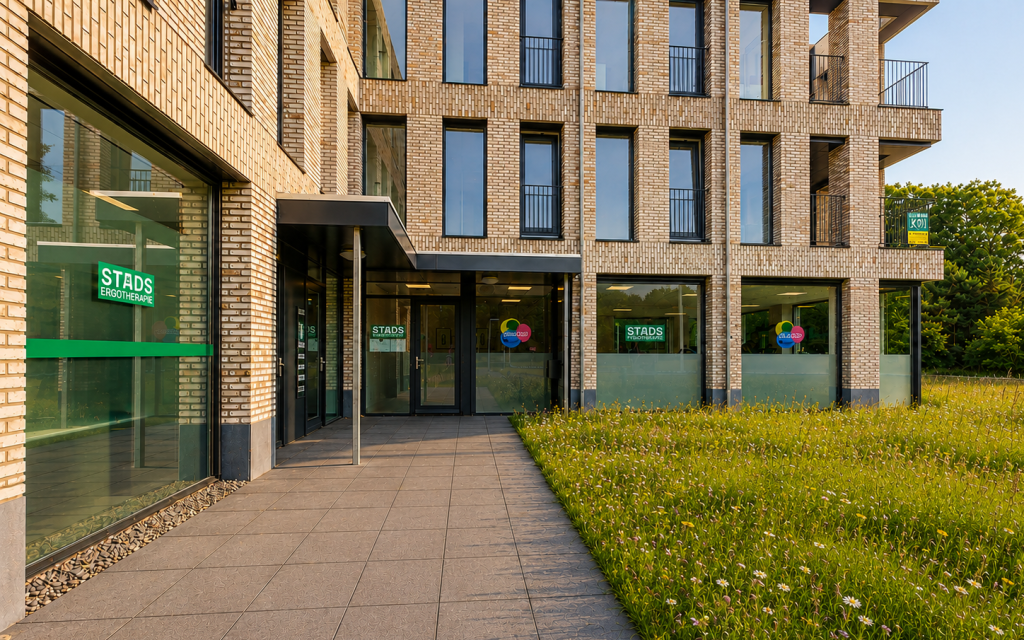
Right in the heart of the Reeshof, close to the A58 exit. Also easy to reach from the surrounding villages.
Address
Reeshofweg 40
5036 BK Tilburg
Mon to Fri, 08.00–18.00
Questions first?
Rather talk to someone first?
Not sure if we can help, or have a question about your treatment or reimbursement? Feel free to get in touch.
Call the practice
You’ll speak to one of us straight away. We’ll check the diary together there and then.
Leave your details
Fill in the contact form and we’ll get back to you as soon as possible.