

STADS Physiotherapy
Plantar fasciitis
Those first steps in the morning should feel normal again.
or call 040 – 311 1151 / 013 – 303 0361
No referral neededSeen within 48 hoursContracts with all health insurers
You feel a stabbing pain under your heel with your first steps out of bed, or when you get up after sitting for a long time. It eases after walking for a bit, but by the end of the day it’s back. There’s a good chance it’s plantar fasciitis. On this page you’ll read what it is, how it develops, what you can do yourself and how our physiotherapists can help you.
What is plantar fasciitis?
Under your foot runs a strong sheet of connective tissue, the plantar fascia. It runs from your heel bone to the base of your toes and supports the arch of your foot. With every step, the fascia is put under tension and absorbs part of the forces.
With plantar fasciitis, the area where the fascia attaches to the heel has become overloaded and sensitive. The name suggests inflammation (the ending -itis means inflammation), but research shows that there is usually no real inflammation. The tissue is mainly overloaded and less able to cope with the forces placed on it. That’s why healthcare professionals increasingly use the term plantar fasciopathy.
That difference is not just a matter of words. It means that anti-inflammatories or rest alone are usually not the answer, and that the approach is all about sensibly dosing and building up load.
What symptoms can you have?
- Pain under or on the inside of your heel
- Severe pain with your first steps in the morning or after sitting for a while
- Pain that eases after walking for a bit, but comes back later in the day or after standing for a long time
- Tenderness when you press on the inside of your heel
- More pain when walking barefoot or on a hard floor
- Pain when climbing stairs or standing on your toes
What causes plantar fasciitis?
Plantar fasciitis is caused by overload. The fascia has to deal with more than it can handle at that moment. It’s a question of load versus load capacity. Often there isn’t one single cause, but a combination of factors. These factors can change over time, for example because of a new job or a new sporting goal.
Factors that increase the load:
- A lot of standing or walking, especially on a hard surface, for example for your work
- A sudden increase in running or walking
- Being overweight
- Worn-out or unsupportive shoes, or walking barefoot a lot when you’re not used to it
Factors that can reduce your load capacity:
- A stiff calf or Achilles tendon, so your ankle doesn’t bend as far
- Little strength in your calf and foot muscles
- Age: the condition is most common between roughly 40 and 60
The shape of your foot, such as flat feet or high arches, can play a part, but it’s by no means always the cause. Many people with flat feet never get heel pain.
How long does it last?
Plantar fasciitis takes patience. The good news is that for most people the symptoms eventually go away. The bad news is that this often takes months. For many people, the pain has gone within a year, with or without treatment, but some have problems for longer.
With good explanation, adjusted load and targeted exercises, many people notice improvement sooner. The course is usually up and down: a day of lots of standing can make the symptoms temporarily worse. So look mainly at the trend over weeks. The sooner you get the load right, the smaller the chance that the symptoms linger. Surgery is rarely needed.
When should you see a physiotherapist?
- Your heel pain hasn’t eased after a few weeks of adjusting things yourself
- The pain is holding you back at work, when walking or in sport
- You don’t know which exercises or shoes are suitable
- You’ve had symptoms for months and feel stuck
- You’re not sure whether it’s plantar fasciitis or something else
Can’t work it out on your own?
Our physiotherapists and occupational therapists are happy to help. In most cases you can come without a referral, in Eindhoven or Tilburg.
When should you see your GP straight away?
Contact your GP (huisarts) if:
- Your foot or heel is red, warm and swollen, especially together with a fever
- You have tingling, numbness or burning pain in your foot
- The pain started after a fall or jump and you can hardly stand on your foot
- You also have pain or swelling in other joints, or morning stiffness in your back
How STADS helps with plantar fasciitis
At STADS, we start with your story. How long have you had symptoms, how much do you stand and walk each day, and what have you already tried yourself? Then we examine your foot, your ankle, your calf and how you walk. This lets us make the diagnosis and rule out other causes of heel pain. An X-ray or ultrasound is usually not needed for this.
We explain what is going on with the sole of your foot and why pain doesn’t mean your foot is being damaged. Understanding what’s happening helps many people move with more confidence. Together we agree on your goal, such as a working day without pain or going for a run again.
Treatment combines adjusting your load with exercise therapy. You do exercises to strengthen the sole of your foot, your calf and your foot muscles, often with heavy, slow strength exercises. Stretching exercises for your calf and sole can also help, especially for morning pain. We give advice on shoes and, if it seems necessary, on insoles or tape for temporary relief. You get a clear exercise programme to take home.
If you’re recovering too slowly despite a good exercise programme, shockwave therapy can be an addition. For runners and other athletes, our sports physiotherapy guides the build-up back to your sport.
What can you do yourself?
- Wear well-cushioned, sturdy shoes and try not to walk barefoot on hard floors while you have symptoms.
- Stretch your calf and the sole of your foot a few times a day, especially before you get up in the morning.
- Temporarily cut back on what causes the most pain, such as standing for long periods or running, and choose cycling or swimming instead, for example.
- Gently roll the sole of your foot over a ball or small bottle; it can feel nice, although it doesn’t solve the cause.
- Then gradually build your activities back up.
- If you’re overweight, losing weight can reduce the load on your feet.
Read also
Related complaints
Good to know
Frequently asked questions
Do I need a referral?
No. In most cases you can come for physiotherapy without a referral from your GP. At your first appointment, we start with a short screening. We check whether physiotherapy suits your complaint, or whether it would be wise to see your GP first. If you do have a referral, feel free to bring it along.
Is physiotherapy covered by my insurance?
That depends on your health insurance and your supplementary package. Many supplementary insurance policies cover a number of treatments per year. For some chronic conditions, a different arrangement applies under your basic insurance. Check your policy or read more on our page on reimbursements and rates.
What is the difference between plantar fasciitis and a heel spur?
A heel spur is a bony outgrowth on the heel bone that you can see on an X-ray. It often occurs together with plantar fasciitis, but also in people without any symptoms. Usually it’s not the spur itself that causes the pain, but the overloaded fascia. That’s why the treatment is largely the same.
Do I need insoles?
Not always. Insoles or heel cushions can give some people temporary relief, especially if you stand a lot. They are no substitute for exercises and adjusting your load. Good, sturdy shoes are often an important first step. Together we’ll discuss whether extra support makes sense in your situation.
Does an injection help?
A cortisone injection can reduce the pain in the short term, but the effect is often temporary and there are risks, such as weakening the fascia or the fat pad under your heel. That’s why it isn’t a first choice. If you have long-lasting symptoms, you can discuss this with your GP. Exercise therapy remains the foundation.
Our locations
Two practices, one team
In Eindhoven and Tilburg, physiotherapists and occupational therapists work together under one roof. Choose the practice that’s easiest for you.
Eindhoven

Centrally located on Geldropseweg, with spacious treatment rooms and a large exercise room. Easy to reach by bike, public transport and car.
Address
Geldropseweg 28
5611 SJ Eindhoven
Free parking behind the building
Tilburg
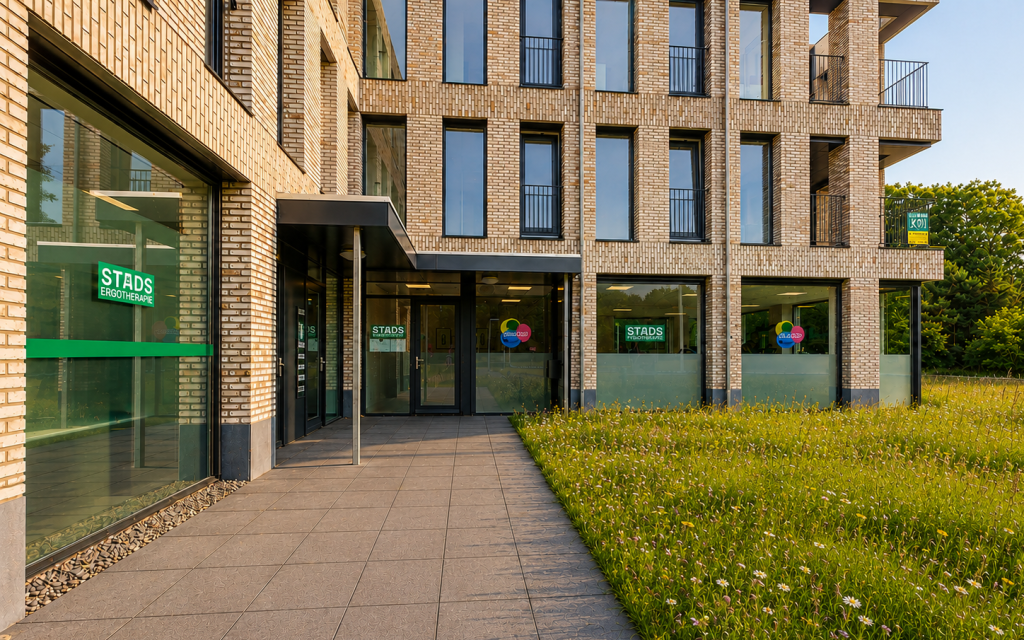
Right in the heart of the Reeshof, close to the A58 exit. Also easy to reach from the surrounding villages.
Address
Reeshofweg 40
5036 BK Tilburg
Mon to Fri, 08.00–18.00
Questions first?
Rather talk to someone first?
Not sure if we can help, or have a question about your treatment or reimbursement? Feel free to get in touch.
Call the practice
You’ll speak to one of us straight away. We’ll check the diary together there and then.
Leave your details
Fill in the contact form and we’ll get back to you as soon as possible.