

STADS Physiotherapy
Cerebral palsy (CP)
Together, we work on what your child wants to be able to do.
or call 040 – 311 1151 / 013 – 303 0361
No referral neededSeen within 48 hoursContracts with all health insurers
Your child has cerebral palsy, or the doctors are investigating whether they do. That’s a lot to take in: appointments, new words and above all many questions about the future. On this page you can read in plain language what cerebral palsy is, how it can develop and what paediatric physiotherapy can offer alongside the care of your child’s doctors.
What is cerebral palsy?
Cerebral palsy, often shortened to CP, is an umbrella term for movement problems caused by damage to or abnormal development of the brain, before, during or shortly after birth. ‘Cerebral’ means ‘of the brain’ and ‘palsy’ means paralysis or reduced control of the muscles.
The damage in the brain itself doesn’t get worse. Yet CP does change over time, because your child grows and develops. Muscles, bones and joints grow too, and that can bring new challenges, such as stiffer muscles or joints in an unusual position.
CP looks different in every child. In some children only one side of the body is mildly affected; other children need a lot of support with movement and daily activities. There are different types, for example with increased muscle tone (spasticity), involuntary movements or problems with balance and coordination. The diagnosis is made by a doctor, such as a paediatrician, paediatric neurologist or rehabilitation physician.
What signs might you see?
- Your child reaches movement milestones such as rolling, sitting or walking later or in a different way.
- The muscles feel stiff or, on the contrary, very floppy.
- Your child clearly uses one arm or leg less than the other side.
- Your child walks on their toes or with bent knees, or has trouble with balance.
- There are involuntary movements or difficulty making purposeful movements with the arms and hands.
- Sometimes there are also problems with eating, speaking, vision, learning or epilepsy.
What causes cerebral palsy?
CP is caused by damage to, or a developmental abnormality in, the developing brain. That can happen during pregnancy, around birth or in the first period after birth. Often it’s impossible to say exactly when and why it happened. It’s important to know that in most cases there was nothing you as a parent could have done differently.
Some factors increase the risk of CP. Premature birth and low birth weight are the best known. An infection during pregnancy, a twin pregnancy, a lack of oxygen around birth, a brain haemorrhage or a serious infection such as meningitis at a young age can also play a part.
Because the brain controls the muscles less well, problems arise with muscle tone, strength, coordination and balance. That affects movement. Over time, muscles can shorten or joints can become stiffer, especially during periods of rapid growth. Moving can also take more energy, so children tire more quickly. That’s why it’s so important for children with CP to keep moving a lot and in varied ways, and for their development to be closely monitored.
How does it progress?
CP is permanent; it doesn’t go away. At the same time, it doesn’t mean your child can’t learn anything. Children with CP develop, learn new skills and find their own way to take part. How that goes varies enormously per child and depends, among other things, on the type and severity of the CP.
Motor development is often fastest in the first years of life. Later, growth spurts can cause temporary setbacks, such as more stiffness. The treatment team usually monitors this with regular check-ups. Making a prediction at a young age is difficult, and the doctors will discuss with you what can be expected for your child.
When should you see a paediatric physiotherapist?
- Your child has been diagnosed with CP and you want support for their motor development, close to home.
- Your child wants to learn a specific skill, such as sitting independently, walking with an aid or cycling.
- You notice your child is getting stiffer, finding movement harder or tiring more quickly.
- You’re looking for advice on posture, handling, play or aids at home.
- The rehabilitation physician or paediatrician advises starting paediatric physiotherapy close to home.
Can’t work it out on your own?
Our physiotherapists and occupational therapists are happy to help. In most cases you can come without a referral, in Eindhoven or Tilburg.
When should you see your GP or your child’s doctor?
Contact your GP, paediatrician or rehabilitation physician if your child loses skills, if their movement clearly deteriorates within a short time, if your child develops pain in a hip or other joint, or if they’re eating poorly or losing weight. With a first or new epileptic seizure, or if your child suddenly becomes very drowsy, call a doctor straight away.
How STADS helps with cerebral palsy
Paediatric physiotherapy for CP is always an addition to the care of your child’s doctors, such as the rehabilitation physician or paediatrician. Many children are also followed by a rehabilitation centre. We coordinate with that team, so our support fits in well and you don’t have to explain everything twice.
We start with a conversation with you and, if possible, with your child. What would your child like to be able to do, at home, at school or when playing? Then we assess how your child moves and what helps or gets in the way. Together, we set concrete, achievable goals.
Our paediatric physiotherapists work in a goal-oriented, active way. Your child practises with real tasks and play, such as transferring, climbing stairs or cycling, and we build up gradually. Strength, fitness and maintaining mobility also get attention. We give advice on posture, handling and aids, and work with the orthotist or the rehabilitation team where needed. CP can’t be cured, but targeted support can help your child move as independently and enjoyably as possible.
If there are questions about play, self-care or school, our paediatric occupational therapist can help think things through. As your child gets older, we look together at suitable sport and activity options.
What can you do yourself?
- Give your child plenty of opportunity to move and explore on their own, even if it takes longer.
- Vary positions throughout the day, such as sitting, standing, lying down and playing on their tummy, if that suits your child.
- Build exercises into daily life, such as when dressing, in the bath or during play.
- Find a sport or activity your child enjoys; there are more and more adapted sport options.
- Use prescribed aids and splints as advised by the treatment team.
- Take good care of yourself too, and look for support from other parents or a parents’ association if you need it.
Read also
Related complaints
Good to know
Frequently asked questions
Can paediatric physiotherapy cure CP?
No. CP is permanent and can’t be cured. But paediatric physiotherapy can help your child learn skills, move as independently as possible, stay mobile and strong, and keep enjoying movement. We focus on goals that matter to your child, always in consultation with their doctors and the rehabilitation team.
Do you work with the rehabilitation centre?
Yes. Many children with CP are followed by a rehabilitation physician or a rehabilitation centre. With your permission, we coordinate with that team on goals, aids and approach. That way your child can get part of their support close to home, while overall medical responsibility stays with their doctor.
Why does my child get stiffer during growth spurts?
In children with CP, bones sometimes grow faster than the muscles can keep up. Especially in muscles with increased tone, that can cause more stiffness or a change in joint position. That’s why it’s important to keep moving well during growth periods and to have their development monitored. If you notice a clear deterioration, discuss it with your child’s doctor.
Do I need a referral for paediatric physiotherapy?
No. In most cases you can come to us without a referral. We then start with a short screening to see whether paediatric physiotherapy suits your child’s needs. The same applies to paediatric occupational therapy. Sometimes we ask for information from the GP, youth doctor or specialist, for example if your child has been assessed before. That way we build on what’s already known.
Is the treatment covered by my insurance?
That depends on the insurance and any supplementary package. For children under 18, paediatric physiotherapy is often (partly) covered by the basic insurance, for a limited number of treatments per year. For some chronic conditions, a different arrangement applies. Paediatric occupational therapy is also often covered by the basic insurance for a number of hours per year. For more information, see reimbursements and rates or feel free to ask us.
Our locations
Two practices, one team
In Eindhoven and Tilburg, physiotherapists and occupational therapists work together under one roof. Choose the practice that’s easiest for you.
Eindhoven

Centrally located on Geldropseweg, with spacious treatment rooms and a large exercise room. Easy to reach by bike, public transport and car.
Address
Geldropseweg 28
5611 SJ Eindhoven
Free parking behind the building
Tilburg
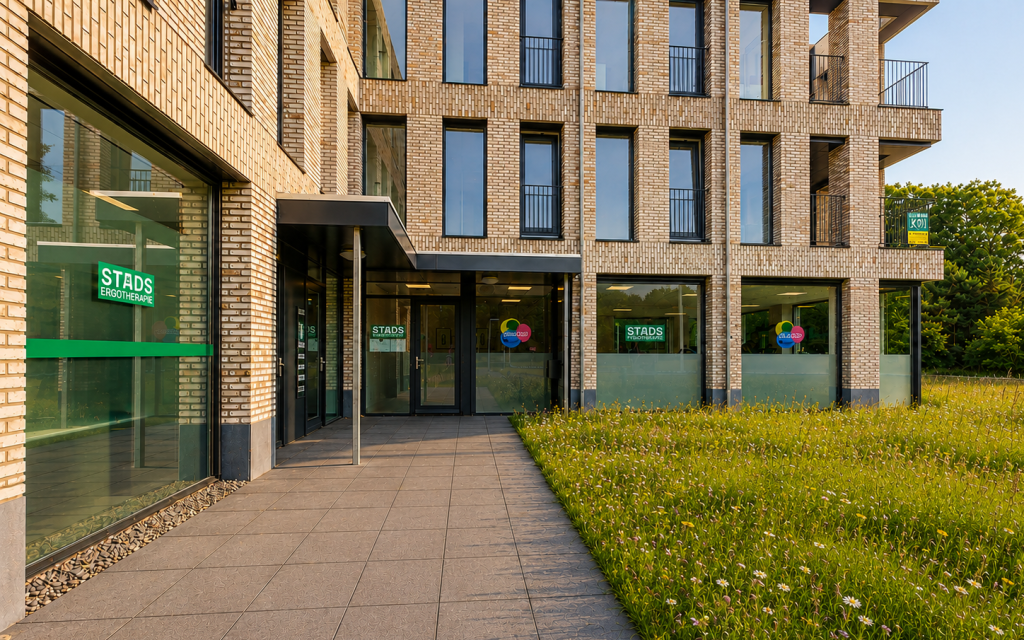
Right in the heart of the Reeshof, close to the A58 exit. Also easy to reach from the surrounding villages.
Address
Reeshofweg 40
5036 BK Tilburg
Mon to Fri, 08.00–18.00
Questions first?
Rather talk to someone first?
Not sure if we can help, or have a question about your treatment or reimbursement? Feel free to get in touch.
Call the practice
You’ll speak to one of us straight away. We’ll check the diary together there and then.
Leave your details
Fill in the contact form and we’ll get back to you as soon as possible.