
STADS Physiotherapy
Manual therapy
 Specialist in treating the spine and joints Often results after just 1 treatment For back pain, neck pain, shoulder pain and headaches, among others
or call 040 – 311 1151 / 013 – 303 0361
No referral neededSeen within 48 hoursContracts with all health insurers
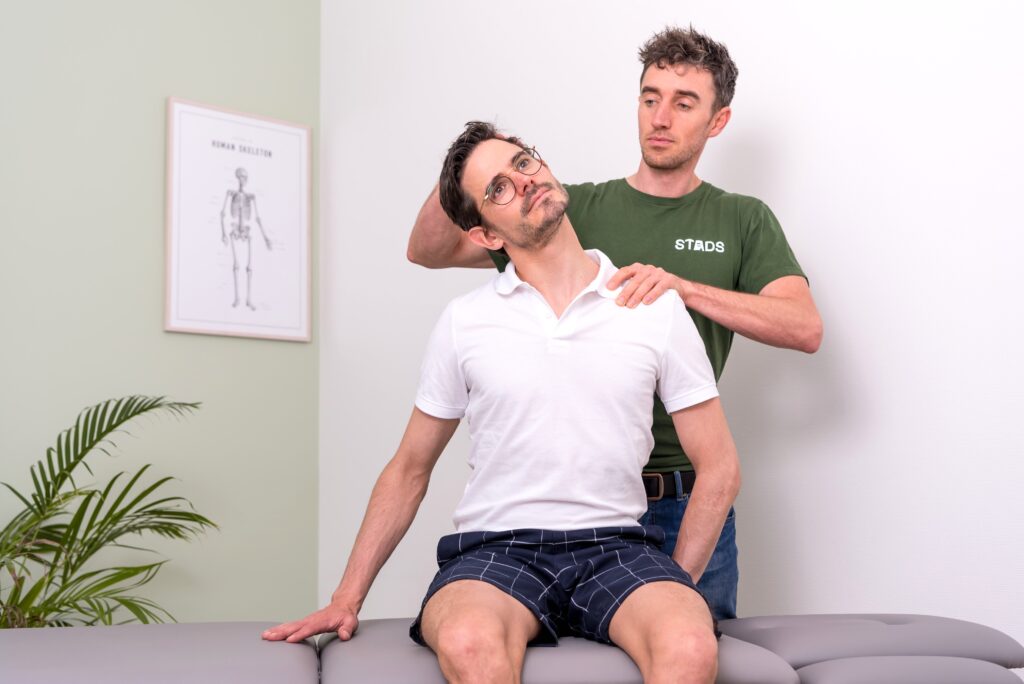
The specialist in neck, back and shoulder
Manual therapists find joints genuinely fascinating. An extra three to four years of study on top of their physiotherapy training makes them the specialists in treating neck pain, back pain and shoulder pain.
How does it work?
Your manual therapist first takes a careful look at how your symptoms started and which factors affect your recovery. That assessment is more thorough than you might expect: where it hurts is often not where the problem starts.
During treatment, your therapist uses special manual techniques. These can reduce pain straight away or improve the mobility of your neck, back or shoulder.
Why it often makes a quick difference
Many people notice more movement after just one treatment. That’s because a stiff joint is often less about damage and more about a pattern: muscles that guard it, a joint that moves less as a result, and pain that keeps it all going.
That first gain is welcome, but it’s not the end. To stop the problem coming back, we then work on strength, load capacity and what you can change in your day.
What can we help with?
- neck and back pain, with or without radiating pain
- shoulder pain and restricted movement
- headaches that come from the neck
- symptoms after whiplash
- a herniated disc in the neck or back
- dizziness linked to the neck
Find out more
You’ll find more background on manual therapy from the Dutch Association for Manual Therapy (Nederlandse Vereniging voor Manuele Therapie, NVMT).
What is manual therapy?
Manual therapy is a specialisation within physiotherapy. It focuses on reducing pain and improving the mobility of joints.
What is the difference between physiotherapy and manual therapy?
You need a bachelor’s degree in physiotherapy to study manual therapy. So every manual therapist is also a physiotherapist. The rule of thumb used to be that physiotherapists focused on soft tissue (muscles and tendons) and manual therapists on hard tissue (spine and joints). That makes the manual therapist the specialist in treating neck, back and shoulder pain, among other things. In recent years, manual therapy training has put more and more emphasis on treating highly complex health problems and on bringing research into treatment.
Which problems can manual therapy help with?
Manual therapy for headaches
Headaches can have many different causes. The manual therapist maps out which factors may play a part and whether treatment can influence them. Especially with tension-type headache, cervicogenic headache (from stiff neck vertebrae) and some forms of migraine, manual therapy can help reduce and resolve symptoms.
Manual therapy for neck pain
Almost everyone has neck pain at some point. It can show up as pain in the neck, headaches, pain between the shoulder blades, or pain/tingling in the arms. Whether your symptoms started recently or have been there for a long time, manual therapy can help reduce and resolve them.
Manual therapy for shoulder pain
After neck and back pain, shoulder pain is the most common problem manual therapists see. What makes it extra frustrating is that shoulder pain often develops gradually and is linked to work and/or sport. The longer shoulder pain goes untreated, the worse the outlook for recovery. So it pays to book an appointment with a manual therapist in good time. As well as moving the joint, the manual therapist will also pay attention to psychosocial factors (especially low mood, worrying about the pain, a passive coping style, somatisation and negative expectations), because these can have an unfavourable effect on how the symptoms develop.
Manual therapy for lower back pain
Almost everyone has back pain at some point. Fortunately, if you keep active in a measured way, back pain usually clears up on its own within 4 to 6 weeks. If you notice no improvement after 3 weeks, or your symptoms are getting worse, book an appointment with a manual therapist.
Manual therapy for upper back pain
Your chest moves with every breath. The ribs that form your chest are attached to the vertebrae of your thoracic spine. Your shoulder blades slide over your chest every time you move your arms. Problems in this area can cause local pain, but can also lead to breathing problems or pain in the shoulder/arm. Treatment by a manual therapist can often bring immediate relief. You’ll usually also be given exercises to support the treatment.
Manual therapy for pelvic pain
Pregnancy and childbirth are probably the best-known causes of pelvic pain. But pelvic pain can have other causes too, and affects both men and women. It can show up as pain in the pelvis, low in the back or in the groin. The pain can also spread to the buttocks or thighs. Manual therapy can look at the load capacity and mobility of the joints. Manual therapists often work closely with pelvic floor physiotherapists.
Manual therapy for dizziness
Several studies show that manual therapy can help reduce dizziness. The manual therapist examines whether your musculoskeletal system (bones, joints, muscles and nerves) plays a part in causing the dizziness and whether this can be influenced. BPPV (benign paroxysmal positional vertigo) is the best-known type of dizziness that can be treated with manual therapy.
Manual therapy for arm or leg problems
Joints such as the hip, ankle, shoulder, elbow and wrist are moving all day long. This makes them prone to overload, and injuries in these areas often get in the way of sport or work. Good load capacity and mobility in these joints are important for reducing and resolving symptoms.
Side effects of manual therapy
Manual therapy treatment can cause a brief increase in muscle soreness, stiffness or headache. These symptoms usually ease within 24 hours.
Am I insured for manual therapy?
If you’re under 18, manual therapy is covered by your basic insurance. If you’re over 18, you need supplementary insurance. Every package has different conditions.
For more information, contact your health insurer, or call STADS. We’re happy to help.
What does manual therapy cost?
Even if you’re not insured for manual therapy, you can still see a manual therapist. In that case we charge our practice rate. Click here for more information.
How many manual therapy treatments do you need?
The great thing about manual therapy is that most people have less pain or move more freely straight after a treatment. In some cases, more treatments are needed to get the result you want, especially when symptoms have been there for a while or keep coming back. It’s important that you learn how your problem started and which advice can help stop it coming back.
Questions first?
Rather talk to someone first?
Not sure if we can help, or have a question about your treatment or reimbursement? Feel free to get in touch.
Call the practice
You’ll speak to one of us straight away. We’ll check the diary together there and then.
Leave your details
Fill in the contact form and we’ll get back to you as soon as possible.