

STADS Physiotherapy
Herniated disc
A herniated disc can be intense, but most people recover without surgery.
or call 040 – 311 1151 / 013 – 303 0361
No referral neededSeen within 48 hoursContracts with all health insurers
You have back pain that spreads into your leg, perhaps down to your foot. Sitting, coughing or bending makes it worse and you’re sleeping badly. That may point to a herniated disc. On this page you’ll read what a herniated disc is, how recovery usually goes, when you should see your GP straight away and how we can help you.
What is a herniated disc?
Between the vertebrae of your spine are intervertebral discs. They act as shock absorbers and consist of a tough outer ring with a soft, jelly-like core. With a herniated disc (in Dutch ‘hernia’), the outer ring partly tears and some of the core bulges out. This happens most often in the lower back, but it can also happen in the neck.
The bulging part can press on a nerve root and irritate it. This causes pain that spreads along the path of that nerve. In the lower back, this is often the sciatic nerve. Doctors then speak of lumbosacral radicular syndrome, commonly known as ‘sciatica’. With a herniated disc in the neck, the pain spreads to your arm.
Good to know: bulging discs are also often seen on scans of people who have no symptoms at all. So not every bulge causes pain. Your symptoms and the physical examination matter most.
What symptoms can you have?
- Pain spreading into your leg, often below the knee, sometimes down to your foot
- The leg pain is often worse than the back pain
- Tingling, or a numb or ‘dead’ feeling in your leg or foot
- More pain when coughing, sneezing, straining or sitting for long periods
- Less strength in your leg or foot, for example difficulty walking on your toes or heels
- With a herniated disc in the neck: pain, tingling or loss of strength in your arm or hand
What causes a herniated disc?
A herniated disc is usually not caused by one wrong movement. Over the years the disc changes: it becomes less supple and the outer ring can develop small tears. At some point, an everyday movement such as bending or lifting can be the last straw that makes the core bulge out.
Here too, the balance between load and load capacity plays a part. Factors that increase the risk of a herniated disc:
- Age: a herniated disc is most common between roughly 30 and 50
- Heavy physical work, a lot of lifting and twisting
- Sitting for long periods and little exercise
- Smoking, which can reduce the nourishment of the disc
- Being overweight
- Hereditary predisposition
So you can’t always prevent a herniated disc. An active lifestyle and a strong, resilient back do reduce the chance of problems.
How long does a herniated disc last?
For most people, a herniated disc has a favourable course. In many people the symptoms clearly ease within the first weeks to a few months, without surgery. The body often partly clears away the bulging piece of disc itself, so the nerve becomes less irritated.
Recovery doesn’t always go in a straight line. You can have better and worse days. Numbness or tingling can sometimes last longer than the pain. In a small group of people the symptoms stay severe or get worse. Surgery may then be considered, in consultation with your GP and a neurosurgeon or neurologist.
A herniated disc can also come back later, in the same or a different place. A strong, resilient back and an active lifestyle help reduce that chance. That’s why we don’t stop our support as soon as the pain eases, but also work on the long term.
When should you see a physiotherapist?
- You want to know what you can safely do and how to keep moving
- Your symptoms haven’t eased, or have barely eased, after a few weeks
- You’re afraid to move or exercise
- You want to get back to work and are looking for a good build-up
- You’ve had surgery for a herniated disc and want to rehabilitate safely
Can’t work it out on your own?
Our physiotherapists and occupational therapists are happy to help. In most cases you can come without a referral, in Eindhoven or Tilburg.
When should you see your GP straight away?
Call your GP or the out-of-hours GP service (huisartsenpost) straight away if you have any of these signs. Don’t wait:
- Difficulty passing urine, being unable to pass urine, or losing control of urine or stools
- Numbness in your groin, around your anus or on the inside of your thighs
- Rapidly increasing weakness in your leg or foot, for example a ‘foot drop’
- Loss of function in both legs
- With a herniated disc in the neck: clumsy hands, difficulty walking or keeping your balance
- Pain so severe that painkillers can’t control it
How STADS helps with a herniated disc
At STADS, we start with a careful conversation and examination. We ask how your symptoms have developed and examine your back, your movements and how your nerves are working: sensation, strength and reflexes. That gives us a clear picture of the situation, and we watch for signs that call for prompt contact with your GP.
Then we explain what’s happening in your back and how it’s expected to progress. Many people find it reassuring to hear that a herniated disc usually improves on its own and that moving is safe. Together we set goals, such as sleeping better, being able to walk for half an hour again or getting back to work.
The treatment is mainly active. Together we look for positions and movements that reduce the leg pain, and we build up your activities step by step. Along the way we work on strength, fitness and confidence in your back. We use passive treatments as support at most. After surgery, we guide your rehabilitation in consultation with your specialist.
If the symptoms last a long time and tension or worry play a big part, psychosomatic physiotherapy can help. Once your treatment is finished, you can keep training under supervision with medical fitness. If work isn’t going well, our occupational therapists can help you with work and return to work.
What can you do yourself?
- Keep moving as much as you can, for example with short walks spread over the day
- Avoid long periods of bed rest; lying down for a while when the pain is severe is fine, of course
- Change position often and don’t sit for too long at a time
- Find positions in which your leg pain eases
- Talk to your GP or pharmacist about pain relief, so you can keep moving
- Build up work and sport again gradually
Read also
Related complaints
Good to know
Frequently asked questions
Do I need a referral?
No. In most cases you can come to us for physiotherapy and occupational therapy without a referral from your GP. At your first appointment, we start with a short screening. We check whether your complaints are suitable for treatment by us, or whether it would be wise to see your GP first. If you do have a referral, feel free to bring it along.
Is the treatment covered by my insurance?
That depends on your health insurance and whether you have a supplementary package. Physiotherapy is usually covered by your supplementary insurance, up to a certain number of treatments per year. For some chronic conditions, a different arrangement applies under your basic insurance. For more information, see our page on reimbursements and rates or check your policy.
Do I need surgery for my herniated disc?
Usually not. Most people with a herniated disc recover without surgery. Surgery may be considered if the pain stays severe after a few months despite treatment, or sooner if there is serious or increasing loss of function. Surgery often brings faster pain relief, but in the long term the results with and without surgery are similar. You make this decision together with your GP and specialist.
Do I need an MRI to know whether I have a herniated disc?
Usually not. The diagnosis is often made based on your symptoms and a physical examination. An MRI is mainly useful if surgery is being considered or if there are warning signs. MRIs also often show bulges that cause no symptoms. So a scan doesn’t tell the whole story about how you’ll recover.
Isn’t moving bad for my herniated disc?
No. Moving is actually good for recovery, even if it sometimes hurts. Long periods of bed rest tend to slow recovery. Choose activities you tolerate reasonably well, such as walking, and build up gradually. If the pain in your leg increases a lot during a particular movement, adjust it for a while. Your physiotherapist will help you find the right balance.
Our locations
Two practices, one team
In Eindhoven and Tilburg, physiotherapists and occupational therapists work together under one roof. Choose the practice that’s easiest for you.
Eindhoven

Centrally located on Geldropseweg, with spacious treatment rooms and a large exercise room. Easy to reach by bike, public transport and car.
Address
Geldropseweg 28
5611 SJ Eindhoven
Free parking behind the building
Tilburg
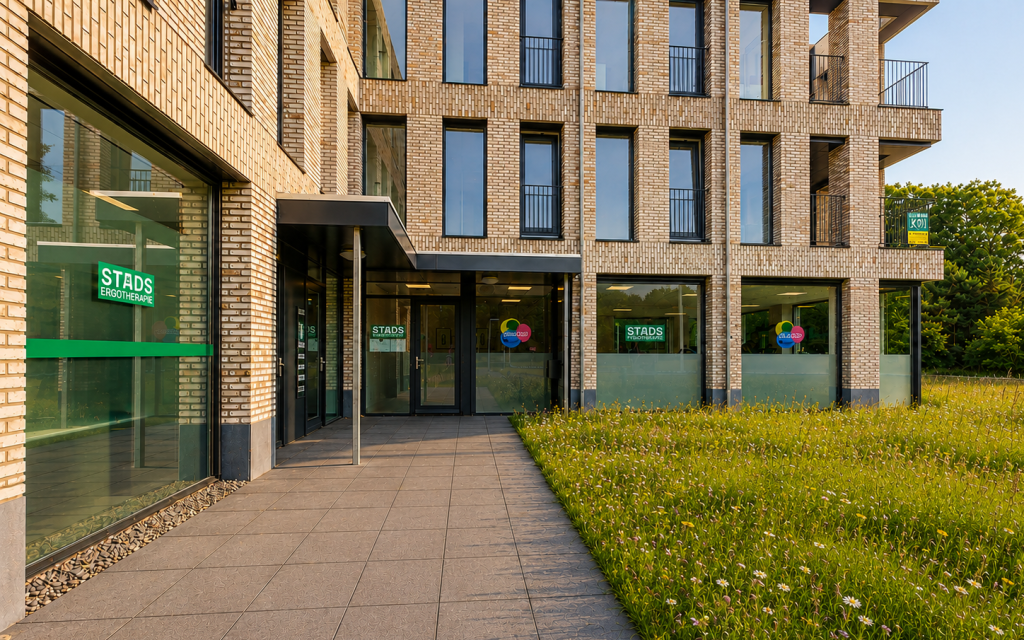
Right in the heart of the Reeshof, close to the A58 exit. Also easy to reach from the surrounding villages.
Address
Reeshofweg 40
5036 BK Tilburg
Mon to Fri, 08.00–18.00
Questions first?
Rather talk to someone first?
Not sure if we can help, or have a question about your treatment or reimbursement? Feel free to get in touch.
Call the practice
You’ll speak to one of us straight away. We’ll check the diary together there and then.
Leave your details
Fill in the contact form and we’ll get back to you as soon as possible.