
STADS Physiotherapy
Scleroderma
A little exercise every day helps keep your hands and joints supple.
or call 040 – 311 1151 / 013 – 303 0361
No referral neededSeen within 48 hoursContracts with all health insurers
Your skin feels tight, your fingers turn white or blue in the cold and moving is harder than it used to be. Perhaps you’ve just been diagnosed with scleroderma and have lots of questions. On this page you’ll read what scleroderma is, which symptoms can come with it and how physiotherapy and occupational therapy at STADS help you stay as supple and independent as possible.
What is scleroderma?
Scleroderma literally means ‘hard skin’. The medical name is systemic sclerosis. It’s a rare, chronic autoimmune disease. Your immune system becomes disrupted, which causes inflammation and makes the body produce too much connective tissue. The small blood vessels are also affected.
Because of the extra connective tissue, the skin becomes thicker, tighter and less supple. This often starts in the fingers and hands, and sometimes in the face too. When the skin around joints gets tighter, those joints can move less far. Fingers can then become bent.
In some people, internal organs are affected too, such as the oesophagus, intestines, lungs, heart or kidneys. Doctors broadly distinguish a limited form, mainly involving the skin of the hands, forearms and face, and a diffuse form, where the skin changes spread further and organs are more often involved. Scleroderma is more common in women than in men. The diagnosis and medical treatment are in the hands of the rheumatologist.
What symptoms can you have?
- Fingers that turn white, blue and then red in the cold or with stress (Raynaud’s phenomenon)
- Swollen fingers and tight, thick skin on the hands, arms or face
- Stiff joints and less range of movement, especially in the fingers
- Less strength and difficulty with fine tasks, such as buttons or holding a pen
- Difficulty opening your mouth wide, for example at the dentist
- Tiredness, shortness of breath on exertion or stomach problems such as heartburn
Which symptoms you have and how severe they are varies a lot from person to person.
What causes scleroderma?
The cause of scleroderma isn’t known. Three processes play a part at the same time: the immune system doesn’t work properly, the small blood vessels become damaged and the body produces too much connective tissue. Why this happens in one person and not in another, we don’t yet know. It’s probably a combination of genetic predisposition and outside factors. It isn’t contagious and you didn’t cause it yourself.
What you can influence is how supple and strong your body stays. This is where the balance between load and load capacity comes in. Because of the tight skin and stiff joints, you naturally start moving less. But moving less actually makes the stiffness worse. Muscles get weaker and joints lose even more range of movement. Your fitness declines too, especially if your lungs or heart are involved.
Regular, well-dosed exercise helps break this cycle. At the same time, tiredness can sometimes leave you with less energy. That’s why it’s important to find a good balance between being active and resting.
How long does it last?
Scleroderma is a chronic disease. The course varies greatly by person and by form. In the limited form, the disease often progresses slowly. In the diffuse form, the first few years are usually the most active, after which the skin thickening eases somewhat in some people.
Only your rheumatologist can give a reliable prediction for your situation. Treatment focuses on slowing the disease, protecting organs and reducing symptoms. That’s why regular check-ups are important. You can also do a lot through exercise to keep your mobility and hand function as good as possible.
When should you see a physiotherapist or occupational therapist?
- Your fingers, wrists or other joints are getting stiffer and you’re losing range of movement
- Your hands work less well and daily tasks take more effort
- Your fitness is declining or you get out of breath more quickly
- You tire quickly and want to learn to spread your energy better
- You want to know which exercises you can do at home yourself
- You’re looking for aids or adaptations at home or at work
Can’t work it out on your own?
Our physiotherapists and occupational therapists are happy to help. In most cases you can come without a referral, in Eindhoven or Tilburg.
When should you see your GP straight away?
- You get small wounds on your fingertips or a fingertip turns dark or black
- You become noticeably short of breath more quickly or start coughing without having a cold
- You suddenly get a severe headache or blurred vision, or notice that you’re passing less urine
- You have difficulty swallowing, or food gets stuck
If you notice these signs, also contact your rheumatologist.
How STADS helps with scleroderma
The medical treatment of scleroderma is in the hands of the rheumatologist and other specialists. Physiotherapy and occupational therapy complement it. That’s why we work closely with your doctor and coordinate when your symptoms change, for example if your lungs or heart become involved.
We start with a conversation and examination. How much can you move your fingers, wrists and other joints? How are your strength, fitness and energy? And what can you manage in daily life? You get an explanation of what scleroderma does to your skin and joints and why movement is so important. Together we set goals that count for you.
With the physiotherapist, you work on the suppleness of your skin and joints with stretching and movement exercises, and on strength and fitness with exercise therapy. Exercises to help you open your mouth properly can also be part of it. We build up gradually and take your lung function and tiredness into account. If your lungs are affected, pulmonary physiotherapy may be suitable.
The occupational therapist focuses on your hand function and daily activities. You get hand exercises, advice on protecting your hands from cold and small wounds, and tips for spreading your energy. Where needed, we look together for aids, such as thicker handles or adaptations in the kitchen, so you can stay independent.
What can you do yourself?
- Do your stretching and hand exercises every day, ideally at set times. A little often works better than a lot now and then.
- Keep your hands and feet warm with gloves, warm socks and layers of clothing.
- Look after your skin with a rich cream and protect your fingertips from small wounds.
- Keep moving, for example by walking or cycling, matched to your energy and breathing.
- Stop smoking. Smoking worsens the blood flow to your fingers.
- Eat smaller portions spread over the day if you have heartburn or trouble swallowing.
Read also
Related complaints
Good to know
Frequently asked questions
Do I need a referral?
No. In most cases you can come for physiotherapy and occupational therapy without a referral. We start with a short screening to check whether we’re the right place for you. Do you already have a diagnosis from your GP or specialist, or a referral? Feel free to bring it along. That helps us tailor the treatment.
Is the treatment covered by my insurance?
That depends on your health insurance and your supplementary package. For some chronic conditions, a different arrangement applies under your basic insurance. Scleroderma is one of the conditions for which physiotherapy is often covered by your basic insurance after the first treatments. For more information, see our page on reimbursements and rates, or check your policy with your insurer.
Is there any point exercising when my skin is so tight?
Yes. Regular stretching and movement help keep your skin and joints as mobile as possible. You also keep your muscles strong and your fitness up. It’s about gentle, daily exercises that you don’t force. Your physiotherapist or occupational therapist will show you which exercises suit you and how often to do them.
What can I do about cold, white fingers?
Keep not just your hands but your whole body warm. Wear gloves, even indoors for cold tasks, and dress in layers. Avoid sudden changes in temperature, such as taking things out of the freezer. Not smoking helps your blood flow. If you get small wounds or a fingertip turns dark, contact your doctor.
What does an occupational therapist do for scleroderma?
An occupational therapist helps you keep doing daily activities as well and as independently as possible. Think of hand exercises, advice on protecting your hands, spreading your energy and smart aids or adaptations at home or at work. That way you keep doing what matters to you.
Our locations
Two practices, one team
In Eindhoven and Tilburg, physiotherapists and occupational therapists work together under one roof. Choose the practice that’s easiest for you.
Eindhoven

Centrally located on Geldropseweg, with spacious treatment rooms and a large exercise room. Easy to reach by bike, public transport and car.
Address
Geldropseweg 28
5611 SJ Eindhoven
Free parking behind the building
Tilburg
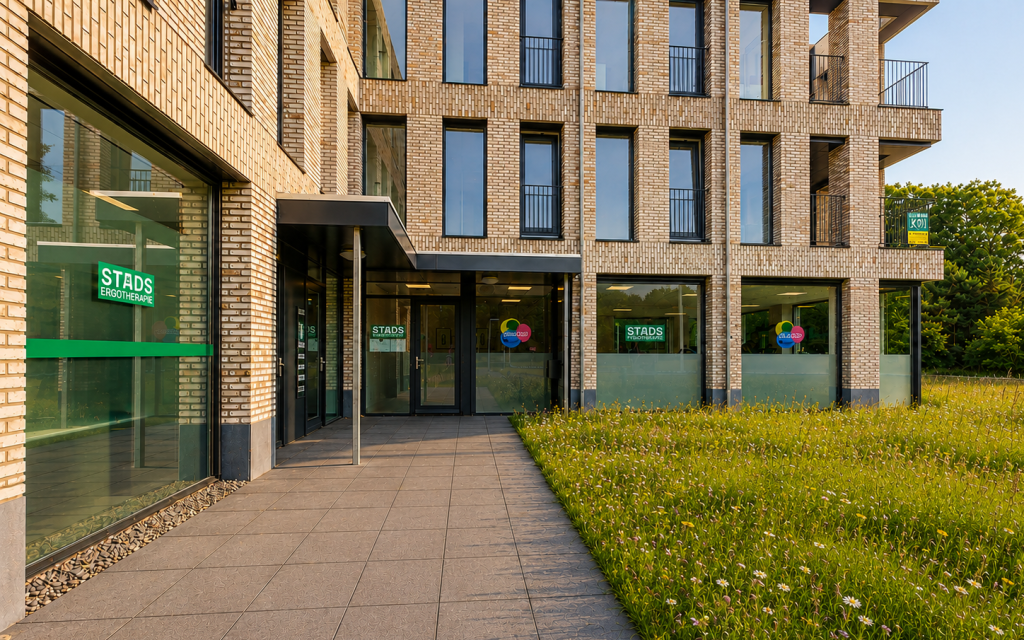
Right in the heart of the Reeshof, close to the A58 exit. Also easy to reach from the surrounding villages.
Address
Reeshofweg 40
5036 BK Tilburg
Mon to Fri, 08.00–18.00
Questions first?
Rather talk to someone first?
Not sure if we can help, or have a question about your treatment or reimbursement? Feel free to get in touch.
Call the practice
You’ll speak to one of us straight away. We’ll check the diary together there and then.
Leave your details
Fill in the contact form and we’ll get back to you as soon as possible.